
Last updated October 16, 2026
 Wrought iron
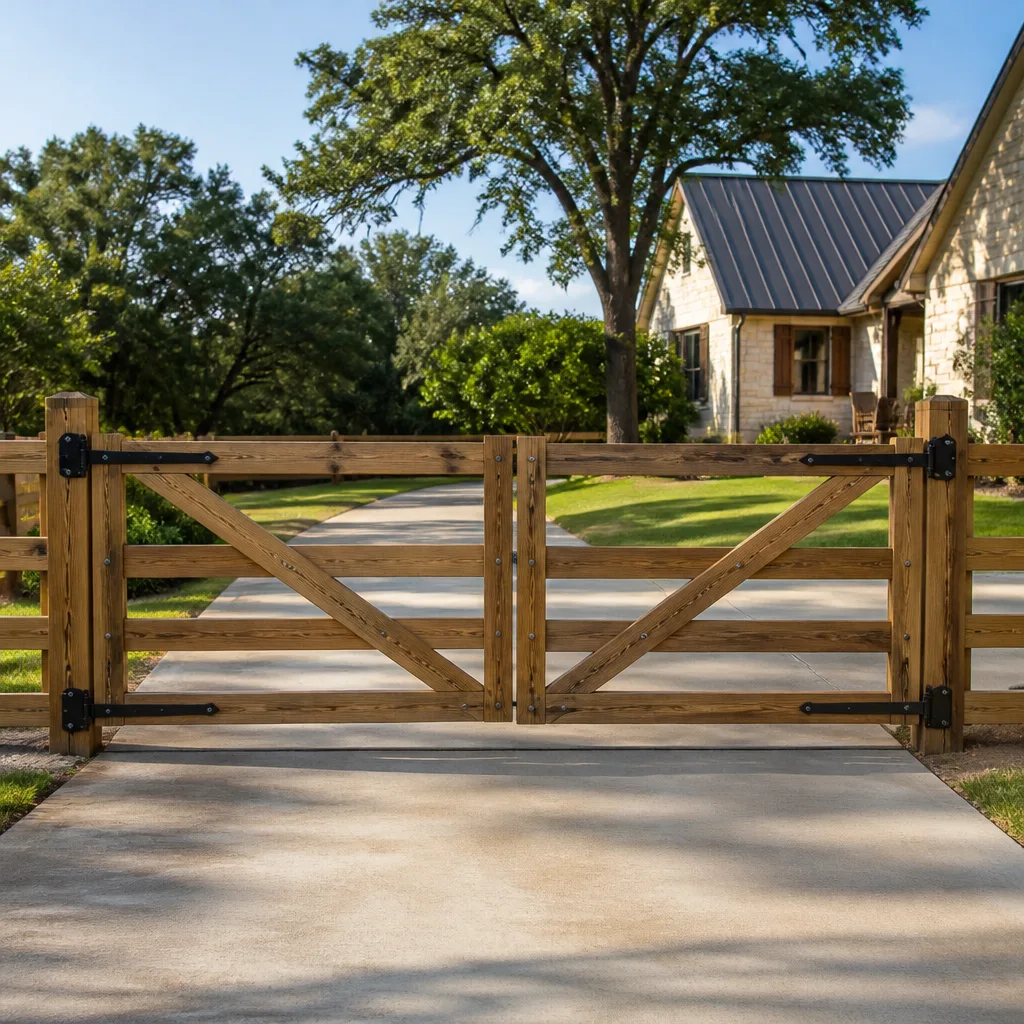 Farm & ranch
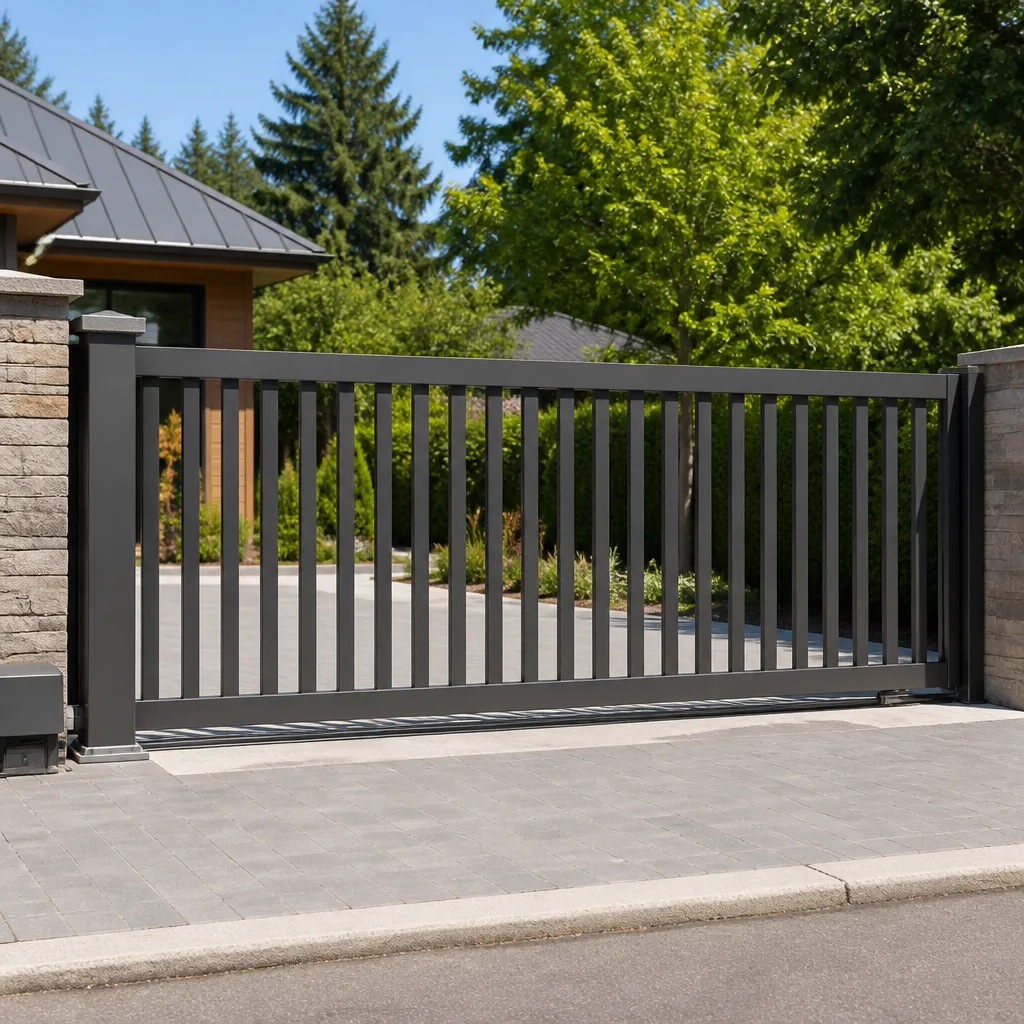 Sliding driveway gates
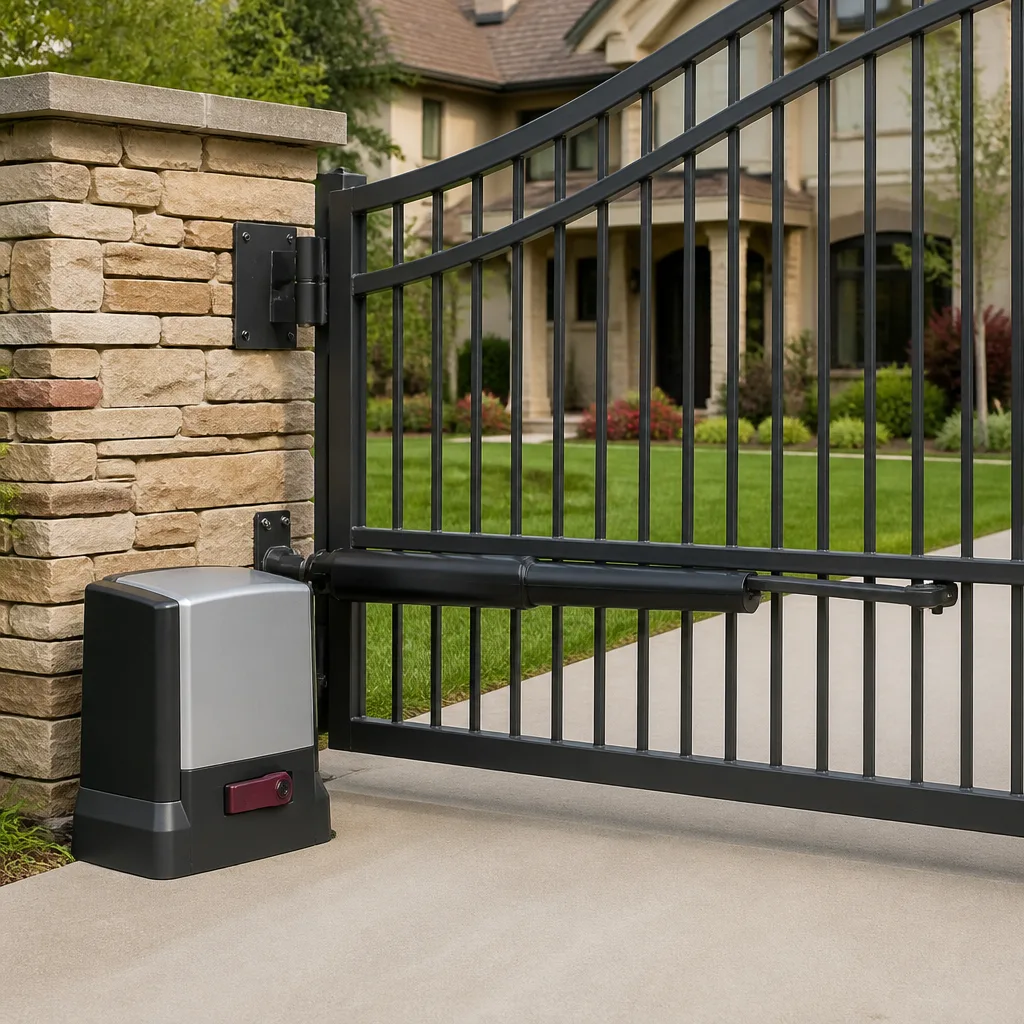 LiftMaster operators
Free on-site gate assessment - hinges, posts, and your LiftMaster or Nice gate operator checked before anything is quoted
The assessment is free and the quote is the invoice.
Get your free estimateDIY vs Professional Gate Repair: The Henderson Homeowner’s Decision Guide
Adjusting a gate hinge yourself is a reasonable Saturday project. Adjusting the travel limits on a gate motor yourself is a project that can burn out the motor in 60 days if the limit is set two millimeters past the correct stop point, a mistake that’s invisible until the motor fails. This guide draws the line between those two worlds. It’s written for Henderson homeowners who want to know exactly which repairs stay within a safe amateur scope and which ones carry failure modes that no amount of YouTube research or Gate Repair Maintenance Checklist for Henderson Homeowners browsing will reveal. We’ll walk through the components one by one, the hidden costs of getting it wrong, and the four questions that tell you which column a job belongs in.
Quick Answer
Most mechanical gate repairs in Henderson, such as hinge lubrication, roller replacement on slide gates, and sensor cleaning, are reasonable DIY projects for a homeowner with basic tools. Gate motor repairs, control board diagnostics, loop detector installation, and any work on a shared HOA entry system are not, because those carry calibration requirements, warranty implications, and safety exposures that a generalist tool set cannot address. If the repair involves wiring, a motor, or a shared gate, call a Gate Repair specialist in Henderson before you open the panel.
Styles & brands we work with
Table of Contents
- Mechanical vs. Electrical: The Real Dividing Line
- What’s Genuinely DIY-Appropriate on a Henderson Gate
- The Hidden Failure Modes in DIY Gate Motor Work
- Henderson HOA Rules and Shared Entry Systems
- Warranty Void Conditions on Major Gate Motor Brands
- The Four-Question Decision Framework
- What DIY Gate Repair Actually Costs in Henderson When It Goes Wrong
Mechanical vs. Electrical: The Real Dividing Line
The DIY-versus-professional question isn’t about how handy you are. It’s about which systems on a gate fail in predictable, visible ways and which ones fail silently until the damage is done. In Henderson, where summer temperatures routinely cross 105 degrees and desert dust coats every exposed surface, both categories behave differently than they would in a milder climate.
Mechanical components are the parts you can see, touch, and usually diagnose with your eyes. Hinges, rollers, chains, track alignment, gate wheels, and physical stops. When these fail, you can see the sag, hear the scrape, or feel the resistance. A homeowner who replaces a worn roller on a slide gate in Anthem or Green Valley Ranch is doing the same job a technician would do, just slower. The failure modes are visible, the tools are standard, and the error is reversible.
Electrical components are different. Limit switches, control boards, loop detectors, capacitor banks, and motor windings fail in ways you cannot see. A limit switch set two millimeters too far tells the motor to keep pushing after the gate has stopped. The gate still opens and closes. For weeks, sometimes months. Then the motor overheats, the winding insulation degrades, and you’re replacing a $600 motor instead of paying for a $150 adjustment. That’s the hidden failure mode. That’s the line.
The rule is straightforward: if you can see the part moving and the repair doesn’t involve opening a control box, it’s probably in the DIY column. If the repair requires a multimeter, a torque wrench with a specific spec, or access to brand-specific calibration procedures, it’s not.
What’s Genuinely DIY-Appropriate on a Henderson Gate
We’re not here to tell you every repair needs a truck roll. That’s not true, and a homeowner who can handle basic maintenance correctly will get more years out of any gate system. Here’s what we tell our own neighbors in Henderson they can reasonably tackle.
Hinge Lubrication and Cleaning
Swing gates in Henderson collect fine desert dust that works its way into hinge pins and turns lubricant into grinding paste. Cleaning the hinge with a degreaser and applying a dry graphite or silicone lubricant twice a year is a legitimate homeowner task. Tools required: a rag, a can of lubricant, and ten minutes. Nothing here can damage the gate or void a warranty.
Photo Eye Sensor Cleaning and Realignment
Modern gates have photo eyes that stop the gate when something breaks the beam. Dust, spider webs, and irrigation overspray are the most common causes of false “obstruction” faults in Henderson. Wiping the lenses with a dry cloth and gently nudging the sensor back to face its partner unit fixes a large share of “my gate won’t close” calls. This is safe and reversible.
Slide Gate Roller Replacement
Slide gates ride on steel rollers inside a track. When a roller seizes, the gate drags and the motor works harder. Replacing a roller is a bolt-out, bolt-in job on most residential gates. You’ll need a jack to lift the gate slightly, a wrench set, and a replacement roller sized to the existing track. Measure the old roller before ordering. This is mechanical, visible, and reversible.
Chain Tension Adjustment
Chain-driven slide gate operators develop slack as the chain stretches, especially after the first year of operation. Tightening the tensioner is a manufacturer-documented maintenance task on many BFT and Linear operators. The key is tension, not tightness. A chain pulled drum-tight loads the gearbox and shortens its life. About one half inch of deflection at the midpoint is the standard. If you’re not sure what that feels like, this one moves out of the DIY column quickly.
Track Cleaning and Debris Removal
This is the gate equivalent of changing your furnace filter. Henderson’s wind blows sand, leaves, and tumbleweeds into slide gate tracks. A clogged track causes the gate to bind, which causes the motor to draw more current, which causes the control board to trip. Ten minutes with a broom and a shop vac every few months prevents a service call. Always clear the track first before assuming the motor is bad.
One more note on DIY work: none of these tasks should require you to remove the motor cover, open the control box, or disconnect any wiring. The moment you’re reaching for a screwdriver to open a panel with wires behind it, you’ve crossed the line.
The Hidden Failure Modes in DIY Gate Motor Work
This section covers what goes wrong when a homeowner opens the control box, adjusts something they shouldn’t, and the gate appears to work fine for weeks before the damage shows up. These aren’t hypotheticals. We’ve seen every one of these on gates across Gate Motor Repair in Henderson service calls.
Limit Switch Miscalibration
The limit switches tell the motor when the gate has reached the end of its travel and when to cut power. On a swing gate, the motor pushes an arm through an arc. If the limit switch is set even a few millimeters past the physical stop point, the motor continues pushing against a gate that can’t move. The gate still opens and closes because the force is absorbed by the gate’s own structure and the motor’s internal friction. What the homeowner doesn’t see is the motor drawing locked-rotor current every cycle, cooking the windings. The typical symptom is a motor that works fine for two months, then dies without warning. A replacement LiftMaster or Viking swing motor runs $400 to $900 installed in Henderson. The limit switch adjustment would have been $120 to $180.
Improper Wire Gauge on Power Runs
Gate motors run on low voltage, either 12V or 24V DC in most residential systems. Low voltage means every foot of wire adds resistance. A homeowner who runs an 18-gauge wire 150 feet from the house to the gate is going to experience voltage drop at the motor. The motor runs slower, runs hotter, and trips the controller under load. The correct wire gauge for a 150-foot run at 24V is typically 12-gauge or 10-gauge, depending on the motor’s current draw. This is a calculation, not a guess. Henderson’s long driveways and deep property setbacks in communities like MacDonald Highlands and Seven Hills make this a recurring problem on DIY installs.
Ground Loop Installation Errors
A loop detector is a coil of wire buried in the driveway that senses a vehicle and signals the gate to open. Installation requires cutting a slot in the concrete or asphalt, laying the wire at the correct depth, sealing it properly, and matching the loop’s inductance to the detector. Henderson’s soil conductivity varies across the valley, from the sandy soils near Lake Las Vegas to the caliche layers in Inspirada. A loop cut too shallow gets crushed by traffic. A loop cut too deep doesn’t sense low-clearance vehicles. A loop sealed with the wrong material lets moisture in, and Nevada’s flash-flood rains will short it within a season. Loop detector repair starts at $350 in Henderson, and the labor is specialized equipment work, not a weekend project.
Capacitor Discharge Injuries
Gate motor control boxes contain capacitors that store charge even after the power is disconnected. A homeowner who kills the breaker and then touches the capacitor terminals can still get a shock. On larger slide gate operators, that capacitor bank holds enough charge to cause real injury. This is the point in the guide where we say plainly: do not open the control box on a gate motor unless you have been trained to work on the specific make and model. The risk isn’t just to the motor. It’s to you.
Henderson HOA Rules and Shared Entry Systems
Henderson has more gated communities per capita than almost any city in Nevada. Green Valley, Anthem, Seven Hills, MacDonald Ranch, Lake Las Vegas, Inspirada, Cadence, and Sun City Anthem all operate shared entry gates that are owned and maintained by the HOA. This changes the DIY calculus completely.
When a gate is owned by the HOA, the homeowner does not have the legal right to modify or repair it. The gate is common-area property, governed by the HOA’s CC&Rs and the Nevada Revised Statutes chapter on common-interest communities. A homeowner who “helps” by adjusting the limit switch on a shared community gate creates a liability situation: if the gate later fails and damages a vehicle or injures a resident, the HOA’s insurance will look for any unpermitted modification as grounds to shift liability. That lands on the homeowner.
Even repairs that seem personal, like replacing the keypad code or rewiring a pedestrian call box, are often covered by HOA maintenance agreements. The right move is to contact your HOA board or management company before touching any part of a shared entry system. Most HOAs in Henderson maintain contracts with gate companies and will dispatch a technician at no direct cost to the homeowner. If you’re not sure whether your gate is HOA-owned or privately owned, check your CC&R documents or call your management office.
For private gates on individual lots, the homeowner makes the call. That’s the scenario this guide is primarily written for. But it’s a distinction worth stating clearly because a surprising number of Henderson residents don’t know which situation they’re in.
Warranty Void Conditions on Major Gate Motor Brands
Every major gate motor manufacturer includes warranty language that voids coverage when unqualified individuals perform certain repairs. This isn’t a scare tactic. It’s in the fine print, and we’ve watched homeowners lose valid warranty claims because they tried to fix a symptom without knowing the terms.
Here’s what the warranty documents say across the brands we service most in Henderson:
LiftMaster and Linear
Both manufacturers void the motor warranty if the limit switches or force settings are adjusted by anyone other than a qualified technician. The reasoning is simple: improper limit or force settings are the leading cause of premature motor failure, and the manufacturer can’t distinguish between a factory defect and a miscalibrated installation. If you adjust the limits yourself and the motor fails within the warranty period, the manufacturer will deny the claim based on evidence of unauthorized adjustment.
BFT and Viking
BFT and Viking warranty documents exclude damage caused by “improper wiring, incorrect voltage, or unauthorized modification.” On a DIY project, any of these is easy to do by accident. BFT operators are used on many of the swing gates in Henderson’s custom home communities, and a replacement board for a BFT unit runs $300 to $700 before labor. Viking operators are common on larger estate gates and slide gates, with even higher replacement costs. Losing a warranty claim over a wiring mistake is an expensive way to save $150 on a service call.
Ghost Controls
Ghost Controls, which makes a popular line of DIY-friendly residential gate openers, includes a specific clause voiding the warranty if the system is installed or repaired by someone who hasn’t read and followed the full installation manual. The manual is available online, and the brand does explicitly support homeowner installation. But the warranty claim process requires proof of correct installation, including wire gauge documentation and limit switch calibration. A homeowner who skips the documentation step has no warranty protection if the board fails.
The practical takeaway: before you decide to tackle a motor-related repair, read your motor’s warranty document. If the job you’re about to do is listed as a void condition, the money you save on labor is outweighed by the warranty coverage you just gave up.
The Four-Question Decision Framework
Here’s the decision tool we promised at the top of this guide. When you’re looking at a gate problem in Henderson, ask these four questions in order. The answers will put the job in the right column without any guesswork.
Question 1: Can I see the failing part, or is it behind a panel?
If you can see it, touch it, and understand why it’s failing, it’s likely a mechanical repair. Rollers, hinges, chains, tracks, and photo eyes are visible. If the problem is behind a control panel, inside a motor housing, or buried in the ground, treat it as professional work. The visible parts fail in visible ways. The hidden parts fail in ways that look like nothing is wrong until the component is destroyed.
Question 2: If I get this wrong, can I undo it?
A hinge you’ve tightened too much can be loosened. A roller you’ve installed incorrectly can be swapped back. A photo eye you’ve nudged can be re-aimed. These errors are reversible. A limit switch set wrong runs the motor hard for weeks and destroys it. A wiring mistake can fry a $400 control board in one power cycle. A ground loop cut at the wrong depth requires new concrete work to fix. If the error isn’t reversible with basic tools, you need a professional.
Question 3: Do I need a tool I don’t own or a spec I don’t know?
Gate motor work requires torque specs, voltage measurements, and brand-specific calibration procedures. You cannot set the clutch tension on a Viking slide operator correctly without the manufacturer’s torque spec. You cannot verify proper wire gauge without knowing the motor’s amperage draw and the length of the run. If the job requires a tool you’d use once, or a number you’d have to look up from a manual you’d have to find, the economics of DIY don’t work. The cost of the tool and the risk of getting the number wrong exceed the cost of a service call.
Question 4: What happens if the gate fails while I’m away?
Henderson homeowners travel, especially in summer when the desert heat pushes people to the coast or the mountains. If you adjust something on your gate, leave for two weeks, and it fails while you’re gone, you’ve got three problems: a gate that’s stuck open or closed, a likely security issue, and a wife or neighbor standing in the driveway looking at a broken motor. If the failure you’re risking can’t wait until you get home, don’t DIY it. A professional repair includes a written price, a guarantee, and someone to call if it fails while you’re out of town. For pricing questions, see Gate Repair in Henderson.
What DIY Gate Repair Actually Costs in Henderson When It Goes Wrong
DIY saves money when the job goes right. Here’s what the same job costs when it goes wrong, based on real repair pricing in the Henderson market and our Gate Repair Cost Breakdown: The Henderson Homeowner’s Reference for 2026.
DIY attempt: Replace a slide gate roller yourself. Cost: $15 for the roller, two hours of your time. Result if correct: you saved a $150 to $250 service call.
DIY attempt: Adjust limit switches on a swing gate motor because the gate was stopping short. Cost: free, ten minutes. Result if incorrect: motor burns out in 60 to 90 days. Replacement motor plus labor in Henderson: $450 to $900, depending on brand and horsepower. The original adjustment by a specialist would have cost $120 to $180.
DIY attempt: Replace a control board on a Linear slide operator. Cost: $350 for a board bought online, two hours of wiring work. Result if incorrect: board burns out immediately due to a wiring error, or works intermittently due to a loose connection. A proper board replacement with testing and calibration in Henderson runs $450 to $650, including the part. The DIY attempt that fails now costs $350 plus the $650 for the proper repair, bringing the total to roughly $1,000 for a job that would have cost $650 done right the first time.
DIY attempt: Install a new loop detector. Cost: $50 for wire and sealant, a day of cutting and burying. Result if incorrect: loop doesn’t detect vehicles, or detects them inconsistently, or floods and shorts within a year. Professional loop installation in Henderson runs $350 to $500, including cutting, sealing, and detector tuning. The DIY loop that doesn’t work still has to be removed or redone, making the total cost higher than hiring it out from the start.
DIY attempt: Replace a swing gate hinge. Cost: $30 for the hinge, two hours. Result if incorrect: the gate sags, the latch misaligns, and the motor binds. This can damage the operator. A hinge replacement by a professional in Henderson with proper gate realignment runs $200 to $350. The DIY path that damages the operator adds a $300 to $700 motor repair on top.
The pattern is consistent: mechanical DIY jobs that go wrong cost a little more than the original service call would have. Electrical and motor DIY jobs that go wrong cost double or triple.
Common Mistakes to Avoid
- Adjusting limit switches without marking the original position. If you don’t know where the switch was before you touched it, you can’t put it back. A two-millimeter error turns into a motor failure in Henderson’s summer heat, where motors already run near their thermal ceiling. Leave limit switches to someone who has the calibration method down.
- Using WD-40 on gate hinges. WD-40 is a water displacer, not a long-term lubricant. In Henderson’s dry, dusty climate, it evaporates quickly and leaves a residue that traps dust. Use a dry graphite or silicone lubricant made for metal-on-metal contact in dusty environments.
- Ignoring the photo eye fault and forcing the gate closed with the manual release. The photo eye is telling you something is wrong. Overriding it repeatedly teaches the system to ignore a safety sensor. The gate will eventually close on a car or a person. Clean and realign the photo eye, or call for service if the fault persists.
- Replacing a control board before checking power at the outlet. A surprising number of “dead board” calls in Henderson turn out to be a tripped GFCI outlet or a breaker that tripped during a summer monsoon storm. Check power at the outlet with a multimeter before buying a $400 board. If you’re not comfortable with a multimeter, that’s a sign the job is beyond DIY scope anyway.
- Attempting any repair on an HOA-owned gate without board approval. Even cleaning the photo eye on a shared community gate can conflict with a maintenance agreement. Unpermitted work on an HOA gate creates liability exposure if the gate later fails. Check with your HOA before touching anything that isn’t on your own property line.
- Running cheap speaker wire from the house to the gate for a new operator. Speaker wire is not rated for outdoor use, not sized for gate motor current loads, and fails within a season in Nevada’s UV and heat. The wire that fails inside your conduit is harder to replace than the wire you run correctly the first time.
When to Call a Professional
Call a professional when the repair involves any of these situations: the gate motor is making a grinding or buzzing sound that wasn’t there before, the gate stops mid-travel and reverses randomly, the control board shows a fault code you don’t understand, the gate opens but won’t close or vice versa, there’s visible damage to the motor housing or wiring, the gate has shifted on its hinges and is dragging, or the repair requires opening the control box. Also call if the gate is HOA-owned and you don’t have written authorization to work on it. Carver Gate Repair Henderson offers free estimates on gate and motor repairs in Henderson, plus more guides & resources to help you decide. Call (775) 307-6571 and we’ll send a background-checked, uniformed technician with a written price before any work starts.
See the difference
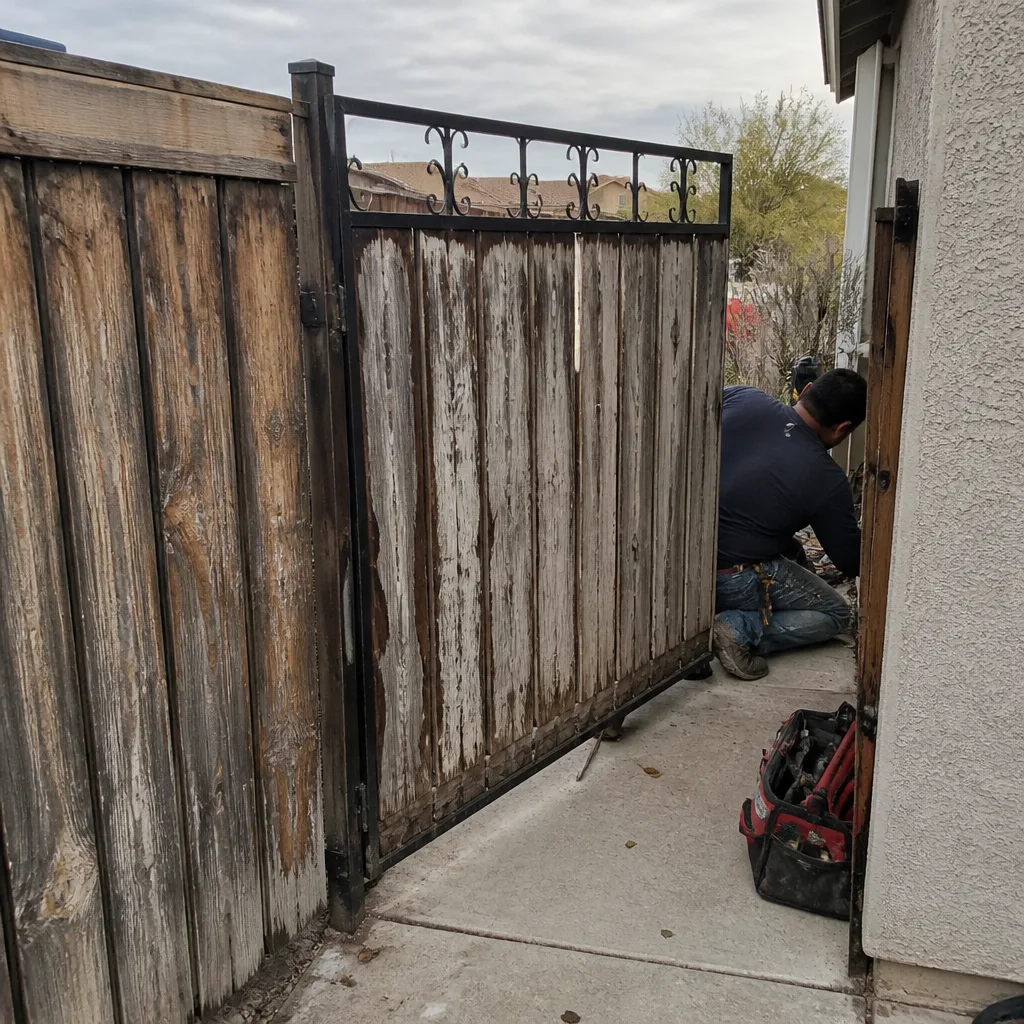 Before
 After
After Before
 After
After Before
 After
AfterFrequently Asked Questions
Most residential gate repairs in Henderson fall between $150 and $650, depending on the specific component. Mechanical repairs like hinge replacement or roller replacement run $150 to $350. Electrical diagnostics and board replacement run $300 to $650. Motor replacement runs $450 to $900 including parts and labor. Carver Gate Repair Henderson gives a written price before any work starts, so the number is locked in before the job begins. Call (775) 307-6571 for the specific cost of your repair.
You can handle mechanical tasks like lubricating hinges, cleaning photo eyes, clearing slide gate tracks, and replacing rollers, provided the gate is on your own property and not owned by an HOA. Do not attempt repairs that involve opening the control box, adjusting limit switches, working on wiring, or replacing a motor. Those jobs carry calibration, safety, and warranty risks that outweigh the money saved.
Yes, in many cases. LiftMaster, Linear, BFT, Viking, and Ghost Controls all include warranty void conditions for unauthorized repairs, improper wiring, or limit switch tampering. If the motor fails during the warranty period and evidence of DIY work is present, the manufacturer will likely deny the claim. Read your warranty document before doing any motor-related work.
The HOA is responsible for repairing any gate that is part of the common area. Homeowners are not authorized to modify or repair HOA-owned gates, even if the repair seems minor. Contact your HOA board or management company to report the problem. The HOA will dispatch its contracted gate company. Unauthorized work on an HOA gate creates personal liability exposure for the homeowner.
Henderson’s summer temperatures exceed 105 degrees, and a gate motor in direct sun runs hotter than its rated operating temperature. Add a misaligned limit switch or a gate that’s dragging on a dusty track, and the motor draws more current and overheats faster. The fastest fix is a proper limit switch calibration and track alignment. The cheapest thing you can do yourself is keep the track clean and the hinges lubricated.
Gate repair covers the physical structure: hinges, rollers, track, frame, and gate alignment. Gate motor repair covers the operator: motor, control board, limit switches, wiring, and remote receivers. The two overlap because a failing mechanical component, like a dragging roller, puts extra load on the motor and causes electrical failures. Gate Installation in Henderson covers full replacement when the existing structure is beyond repair. If you’re not sure which category your problem falls into, call (775) 307-6571 and describe what the gate is doing. We’ll tell you over the phone which type of service you need.
The Bottom Line
Most Henderson homeowners can handle the mechanical side of gate maintenance: lubricating hinges, cleaning photo eyes, clearing tracks, and replacing worn rollers. These are visible, reversible tasks with predictable failure modes. The electrical side is different. Limit switches, control boards, wiring, and loop detectors fail invisibly, carry warranty void conditions, and can injure the person who opens the wrong panel. Use the four-question framework: if you can see the part, undo your error, own the tools, and survive a failure while you’re away, it’s DIY. If any answer is no, call a professional. Our Carver Gate Repair Henderson home page covers the full scope of our work in this market.
Written by Lonnie Burke, Owner at Carver Gate Repair Henderson, serving Henderson since 2008.