
Last updated October 16, 2026
 Wrought iron
 Farm & ranch
 Sliding driveway gates
 LiftMaster operators
Free on-site gate assessment - hinges, posts, and your LiftMaster or Nice gate operator checked before anything is quoted
The assessment is free and the quote is the invoice.
Get your free estimateGate Repair Maintenance Checklist for Henderson Homeowners
Lubricating a gate hinge with WD-40 in Henderson’s summer heat doesn’t protect it. It evaporates within weeks and leaves the metal drier than before. The wrong maintenance routine can accelerate failure faster than no maintenance at all. This guide is built for Henderson specifically. It accounts for triple-digit summers, alkaline soil that shifts concrete, and dust that works its way into every pivot point. You’ll learn which lubricants actually hold up above 105°F, which tasks matter each month, and the five-minute weekly visual inspection that catches most failures before they become service calls. No generic spring/fall advice. Just the checks that keep a Henderson gate operating.
Quick Answer
A proper Henderson gate maintenance routine combines weekly visual checks, monthly lubrication with high-temperature-rated products, and seasonal inspections that account for extreme heat and alkaline soil movement. The most important tasks are keeping pivot points lubricated with a dry-film or high-temperature grease, checking gate post alignment for concrete shift, testing the motor’s battery backup before summer, and clearing drive-wheel tracks of dust and debris. Consistent 10-minute monthly checks prevent most Gate Repair services calls in Henderson.
Styles & brands we work with
Table of Contents
- The Five-Minute Weekly Visual Inspection
- Monthly Maintenance Tasks for Henderson Gates
- Lubrication in Henderson’s Heat: What Works Above 105°F
- Concrete and Asphalt Movement: Post Alignment in Henderson
- Battery Backup Inspection Before Summer Heat
- Month-by-Month Maintenance Schedule for Henderson
- Common Mistakes to Avoid
- When to Call a Professional
- Frequently Asked Questions
The Five-Minute Weekly Visual Inspection
Most gate failures in Henderson give you Gate Repair Warning Signs: A Henderson Homeowner’s Reference Guide days or weeks before they become a breakdown. You don’t need tools for this check. You need five minutes and a habit of actually doing it. In our experience, homeowners who run this quick inspection every week catch roughly 80% of developing problems before the gate stops moving entirely.
Here’s the routine we recommend. Do it the same day each week so it becomes automatic.
- Stand at the gate and watch it open and close fully. Listen for any new grinding, scraping, or hesitation. A smooth gate should sound consistent from start to finish. A change in sound is the earliest warning of a failing bearing or motor strain.
- Look at the gate’s path on the ground. Check for fresh cracks in the concrete or asphalt where the gate wheels run. Henderson soil expands and contracts with heat, and new cracks mean the track or post alignment is shifting.
- Check the gap between the gate and the gate post. The gap should be even top to bottom. If the gate sags toward the latch side or the gap widens at the bottom, the hinges or the post itself are moving.
- Inspect the hinge bolts and mounting bolts. Reach down and feel for any bolt that has loosened. On metal gates, heat cycling over years causes bolts to back out slowly. A loose hinge bolt is a 30-second fix now and a bent gate later if ignored.
- Check the gate motor housing. Look for dust buildup around the motor’s vents. Henderson dust is fine and alkaline, and it reduces motor cooling in summer. If the vents look caked, gently brush them clear.
This check costs nothing. It takes less time than finding your car keys. And it’s the single highest-return habit for avoiding a Gate Repair in Henderson call on a 110-degree Saturday afternoon.
Monthly Maintenance Tasks for Henderson Gates
The monthly list builds on the weekly visual check. Where the weekly routine is about catching problems, the monthly routine is about preventing them. These tasks address the specific wear patterns Henderson’s climate creates: heat-cured lubrication failure, dust ingestion, and soil-driven frame movement.
Monthly Task List
- Re-lubricate all pivot points with a high-temperature-rated product. More on the exact products below. The key point: Henderson’s summer heat burns off light oils within three to four weeks. Monthly application is the minimum interval between May and September.
- Clean the gate track or drive-wheel path. Use a stiff brush or leaf blower to clear dust, gravel, and debris from the wheel track. Dust that packs into track grooves acts like sandpaper on wheels and rollers.
- Check the photo-eye sensors. Wipe the lenses with a dry cloth. Henderson dust coats the lenses and reduces their range, which can cause the gate to reverse unexpectedly or refuse to close.
- Tighten any hardware that’s worked loose. Check hinge bolts, bracket bolts, and motor mounting bolts with a wrench. Heat expansion and gate vibration loosen them over time.
- Test the manual release mechanism. Disengage the motor and open the gate by hand. It should move smoothly without binding. This also confirms the release handle works when you need it during a power outage.
- Inspect the gate’s finish for bare metal or rust spots. Henderson’s dry climate limits rust compared to coastal areas, but any scratch that exposes bare metal will oxidize slowly from morning dew. Touch up small spots with paint or a rust-inhibiting primer.
These tasks take 20 to 30 minutes per month. They cost almost nothing. And they directly extend the service life of hinges, wheels, motors, and the gate frame itself.
Lubrication in Henderson’s Heat: What Works Above 105°F
Here’s the problem with most generic gate maintenance advice: it recommends all-purpose lubricants like WD-40 or standard spray grease. Those products are designed for moderate temperatures. In Henderson, where surface temperatures on a metal gate regularly exceed 130°F in July and August, standard lubricants break down in weeks. What’s worse, a solvent-based product like WD-40 displaces existing lubrication, then evaporates, leaving the metal joint drier than when you started. That’s not maintenance. That’s accelerated wear.
So what actually holds up?
Lubricants That Work in Henderson’s Heat
- Dry-film lubricants with PTFE or molybdenum disulfide. These go on as a liquid carrier and dry to a solid film that stays put in high heat. They don’t attract dust the way wet greases do. Look for products labeled as dry-film or penetrating dry lubricant. We’ve seen these hold up through full Henderson summers without reapplication.
- High-temperature synthetic grease rated to at least 300°F. For hinge pins and pivot joints, a synthetic grease with a high drop point works well. Apply it sparingly. Too much grease attracts dust, and Henderson dust mixed with grease forms a grinding paste that accelerates wear on the exact parts you’re trying to protect.
- Silicone-based lubricants for plastic and rubber components. On gate wheels with nylon or composite rollers, silicone is the safe choice. It doesn’t degrade plastic parts and it handles high heat without breaking down.
What to Avoid
- WD-40 or any general-purpose penetrating oil. These are solvents first, lubricants second. They strip existing protection and evaporate quickly in heat.
- Heavy axle grease. It seems durable, but it holds dust like a magnet. In Henderson, dust-laden grease on a gate hinge becomes an abrasive compound within a month.
- White lithium grease in spray form. It’s fine in moderate climates but breaks down and runs at sustained high temperatures, leaving bare metal behind.
If you’re not sure what’s already on your gate, look at the hinge after the next hot week. If it looks dry or dusty rather than lightly coated, whatever was applied isn’t surviving the heat. Switch to a dry-film product and reapply monthly through the hot season.
Concrete and Asphalt Movement: Post Alignment in Henderson
Henderson’s soil is alkaline and expansive in many neighborhoods, which means it swells and shrinks as moisture content changes. For details on local requirements, see our guide on Gate Repair Permits, Codes & Inspections in NV: What You Need to Know. But here’s what surprises homeowners: Henderson gets very little rain, so the bigger factor isn’t moisture fluctuation. It’s heat. Sustained triple-digit temperatures cause concrete and asphalt to expand. When temperatures drop at night, they contract. Over a full summer of 40-degree daily swings, that thermal cycling moves slabs enough to shift gate posts out of alignment.
The result is a gate that doesn’t close squarely against the latch, a motor that strains against a misaligned track, or wheels that ride up over the edge of a shifted pavement seam. In neighborhoods like Green Valley Ranch and Anthem, where driveway aprons and gate posts sit on poured concrete, we regularly see post lean develop over 12 to 18 months without any visible cause. The slab moved. Not by much, but enough.
What to Check
- Check the gate post with a level every three months. Place a carpenter’s level vertically against the post on two adjacent sides. Any movement beyond slightly off-plumb signals soil or slab movement.
- Look for fresh cracks radiating from the base of the post. A new crack running from the post footing across the concrete pad means the slab is shifting and taking the post with it.
- Watch for the gate dragging or scraping on the ground. If the gate wheels are riding fine one week and scraping the next, the pavement has moved. This is more common in summer, when expansion is at its peak.
- Check the gap between the two gate leaves on a double gate. If the gap is narrower at the top than at the bottom (or vice versa), one post has shifted or one leaf has sagged.
Post realignment is not a DIY job. It requires resetting the post in fresh concrete or adding steel shims to restore plumb. A misaligned post that stays uncorrected puts load on the hinges and motor that shortens the life of both. If you catch the movement early, the fix is a service call. If you ignore it, the fix becomes a full Gate Installation in Henderson.
Battery Backup Inspection Before Summer Heat
Most Henderson homeowners don’t think about their gate motor’s battery backup until a power outage hits and the gate won’t open. That’s the wrong time to discover the battery died eight months ago. Henderson’s summer heat is the biggest threat to battery life. Sealed lead-acid batteries, which most gate operators use for backup power, lose service life rapidly when stored at sustained high temperatures. A battery that would last five years in a moderate climate might last two or three in a Henderson garage or outdoor motor housing that bakes at 110 degrees all summer.
Here’s the inspection routine we recommend every spring, before the heat builds.
Battery Health Check
- Locate the battery. It’s typically inside the gate operator housing or in a separate weatherproof box near the motor. Open the housing and look at the battery’s condition.
- Check for swelling or deformation. Heat damage shows up as a bulging case or a warped top. Any visible deformation means the battery is failing and should be replaced.
- Check terminal corrosion. White or green powdery buildup on the terminals reduces charging efficiency. Clean terminals extend life, but heavy corrosion usually indicates the battery has been overheating.
- Test standing voltage with a multimeter. A healthy 12-volt battery should read approximately 12.6 to 12.8 volts when fully charged and the charger is disconnected. A reading below 12.4 volts indicates the battery is losing capacity. Below 12.0 volts, it’s time to replace it.
- Test the gate on battery power. Shut off the main power to the gate operator and try to open and close the gate. It should operate at normal speed. If it hesitates, moves slowly, or doesn’t move at all, the battery has degraded beyond usefulness.
Battery replacement is straightforward for some gate motor brands, but it involves opening the operator housing and disconnecting live terminals. On DoorKing and LiftMaster units especially, we recommend having a technician handle the replacement if you’re not comfortable working with electrical components. The battery itself isn’t dangerous, but the main power connection inside the housing is.
For gates with Gate Motor Repair in Henderson needs, battery condition is one of the first things a technician should check. A weak battery often masquerades as a motor problem: slow operation, intermittent failure, or a gate that reverses for no visible reason can all trace back to a failing backup battery.
Month-by-Month Maintenance Schedule for Henderson
Generic maintenance guides divide tasks into spring and fall. That framework doesn’t fit Henderson. The city’s climate is defined by long, hot summers and mild winters with almost no precipitation. The maintenance calendar below is tied to what actually happens to a Henderson gate each month. Follow it and you’ll address problems at the moment they begin, not months later when they’ve compounded.
January and February
These are Henderson’s coolest months, with daytime highs typically in the 60s and occasional overnight frost possible in outlying areas like Boulder City and the McCullough Range foothills. This is the best window for heavier maintenance tasks that are unpleasant in summer.
- Complete a full gate inspection. Check hinges, wheels, posts, motor, and track with no time pressure. The mild weather means you can spend an hour looking at everything without sweating through the job.
- Apply a fresh coat of dry-film lubricant to all pivot points. The film will last longer now than it will in summer heat.
- Test the battery backup. Cold nights, though rare, can reduce battery output. Confirm the backup still operates the gate at normal speed.
March and April
Spring in Henderson means temperatures climbing from the 70s toward the 90s, and it often brings the year’s most noticeable wind. Spring wind gusts carry dust and sand that coat everything, including gate tracks and motor vents.
- Clear wind-blown debris from the gate track and wheel path. Spring dust accumulation is the heaviest of the year in Henderson.
- Clean the motor housing vents. Dust caked on the vents now will reduce motor cooling when the heat arrives in May or June.
- Check post alignment after winter temperature swings. The 30-degree daily temperature range in March stresses concrete almost as much as summer heat does.
May and June
This is the transition into Henderson’s hot season. June consistently reaches 100°F or higher by the end of the month. Anything that’s marginal in spring will fail in summer heat.
- Re-lubricate with dry-film product. The spring-weather application is breaking down by now. Reapply before the sustained heat arrives.
- Test the battery backup again. This is the most important pre-summer check. Battery capacity degrades rapidly once the motor housing sits in 100-degree temperatures daily. Confirm the battery reads 12.4 volts or higher.
- Inspect for sun damage on weather seals and plastic components. Ultraviolet exposure in Henderson is intense. Cracked or brittle plastic around the photo-eye sensors or motor housing should be addressed before it fails.
July and August
These are Henderson’s most punishing months. Highs routinely exceed 105°F, and surface temperatures on metal gates can pass 140°F. This is not the time for major maintenance. It’s the time for observation and light-touch upkeep.
- Run the weekly visual inspection without fail. Heat failures happen fast. A gate motor that’s been running under slight strain for months will burn out during the third or fourth consecutive 110-degree day.
- Re-lubricate at the month’s start. Even dry-film lubricants lose effectiveness under sustained extreme heat. Reapplication midway through summer prevents metal-on-metal wear.
- Don’t run the gate more than necessary. Shorten open-close cycles where possible. If you have a pedestrian gate or a side entrance, use it during the worst heat and give the vehicle gate a rest. It’s not about saving electricity. It’s about limiting heat accumulation in the motor windings.
September and October
Temperatures moderate from the 100s back into the 80s and 90s, and occasional monsoon-season moisture from the south can bring brief but intense rain. Henderson’s alkaline soil absorbs water quickly, but even a short downpour can cause minor soil movement around gate posts.
- Inspect gate posts for any shift after summer. The combination of summer heat expansion and any monsoon moisture is the peak risk window for soil-driven post movement.
- Check for rust on any exposed metal. Rain in Henderson is infrequent but it does happen. Any metal that lost its paint or coating during the summer is vulnerable.
- Service the motor after its hardest season. This is a good time for a professional inspection if the gate showed any signs of strain during July or August.
November and December
Henderson’s winter is mild, with daytime temperatures in the 50s and 60s and rare freezing overnight lows. Gates that survived summer are unlikely to face serious stress now. Use this season for preventive work and preparing for the next hot season.
- Complete a thorough cleaning of the gate and motor housing. Remove accumulated summer dust and any monsoon-season debris.
- Apply a protective coating to any bare metal. Preventing rust now means less work in spring.
- Review the year’s maintenance log. If the gate needed repeated lubrication or showed recurring alignment changes, consider a professional evaluation before next summer.
This schedule is built for Henderson’s actual climate, not a national average. Follow it and the gate handles summer instead of failing during summer.
Common Mistakes to Avoid
These are the maintenance errors we see most often in Henderson. Each one comes from experience running service calls across the city, from Green Valley Ranch to Anthem to Inspirada.
- Using WD-40 as a lubricant. It’s a solvent. It strips existing lubrication, evaporates within weeks in Henderson heat, and leaves joints dry. Use a dry-film lubricant instead.
- Skipping lubrication entirely until the gate squeaks. A squeak means metal is already wearing against metal. By the time you hear it, the joint has been dry long enough to cause measurable wear.
- Over-greasing hinges. Heavy grease attracts dust, and Henderson dust laden with grease becomes an abrasive paste that accelerates wear. Apply sparingly, not generously.
- Ignoring a gate that opens slightly slower than it used to. Slow operation in spring becomes complete failure in summer. A gate motor that runs under any strain will overheat when ambient temperatures hit 105°F.
- Never testing the battery backup. A battery that hasn’t been tested in two years won’t work when you need it during a summer power outage. Test it every spring.
- Painting over rust instead of treating it. Paint seals rust in place. It looks fine for a few months, then the rust spreads underneath and the paint flakes. Treat the rust first, then paint.
- Delaying post realignment because the gate “still closes.” A misaligned post forces the motor to work harder on every cycle. That extra work shortens motor life and eventually costs more than the realignment would have.
When to Call a Professional
Some maintenance tasks are homeowner work. Others are professional territory. If the gate post has visibly shifted out of plumb, the concrete footing needs to be reset, and that’s not a weekend project. If the motor is making new noises, struggling to move the gate, or tripping its breaker repeatedly, continued operation can cause damage that turns a $300 repair into a $1,500 replacement. If the battery backup won’t hold a charge above 12.0 volts, replacement involves working around live electrical connections inside the operator housing. Carver Gate Repair Henderson handles all of these. We provide free estimates to homeowners throughout Henderson, and every repair includes a written price before work starts, plus a written guarantee good for a full year. Call (775) 307-6571 and a live person answers, day or night.
Frequently Asked Questions
Monthly during the hot season, which runs May through September. Temperatures above 100°F break down standard lubricants within weeks. A dry-film lubricant applied monthly prevents metal-to-metal contact. Between October and April, every six to eight weeks is sufficient.
A dry-film lubricant with PTFE or molybdenum disulfide holds up best above 105°F. These products dry to a solid film that doesn’t attract dust and doesn’t evaporate in heat. Avoid WD-40, general-purpose penetrating oils, and heavy axle grease.
Check the gate with a level every three months. Also look for fresh cracks in the concrete around the post base, changes in the gap between the gate and post, or the gate dragging on the ground where it didn’t before. Post movement is common in Henderson due to thermal expansion of concrete and alkaline soil conditions.
Most modern gate operators in Henderson include a battery backup. To test it, shut off the main power to the gate operator and try to open and close the gate. It should operate at normal speed. Use a multimeter to check standing voltage: 12.6 to 12.8 volts is healthy. Below 12.4 volts indicates reduced capacity, and below 12.0 volts means replacement is due.
Our technicians are trained on LiftMaster, FAAC, BFT, Linear, Viking, Ghost Controls, DoorKing, Elite, and Mighty Mule equipment. If your gate operator is one of these brands, we have the parts and the service knowledge to handle the repair. If you have a different brand, call us at (775) 307-6571 and we’ll tell you honestly whether we can help.
A homeowner can complete most routine maintenance with $20 to $40 worth of lubricant and cleaning supplies per year. Professional service calls for specific issues vary by the job: a standard tune-up and lubrication typically runs $120 to $200, a battery replacement $80 to $180 depending on the battery type, and post realignment $300 to $800 depending on whether the concrete footing must be reset. Call Carver Gate Repair Henderson at (775) 307-6571 for an exact quote on your gate. Estimates are free, and the written price is what you pay.
The Bottom Line
Henderson gates fail for predictable reasons: heat-degraded lubrication, dust accumulation, concrete movement from thermal cycling, and battery degradation in summer heat. A maintenance routine that addresses those specific conditions is what keeps a gate reliable. Five minutes every week watching the gate move. Thirty minutes every month cleaning and lubricating. A battery test every spring. A level check every quarter. That’s the entire system. It’s not complicated, but it only works if it’s done on schedule with the right products. Miss the schedule or use the wrong lubricant, and the gate will eventually stop at the worst possible time. For homeowners in Henderson who prefer to hand the job to someone else, Carver Gate Repair Henderson offers free estimates and repairs backed by a written guarantee. Call (775) 307-6571 or visit the Carver Gate Repair Henderson home to schedule.
Written by Lonnie Burke, Owner at Carver Gate Repair Henderson, serving Henderson since 2008. Explore more guides & resources on our blog.
See the difference
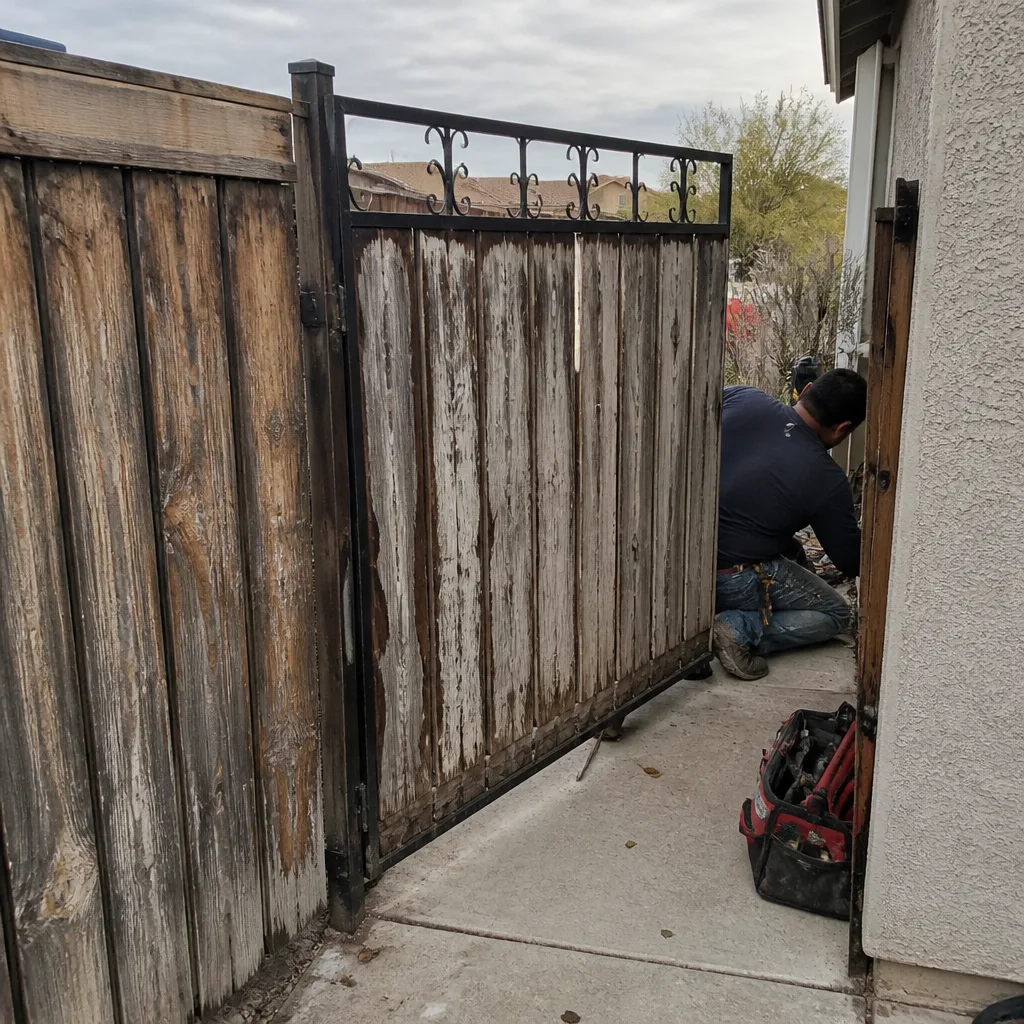 Before
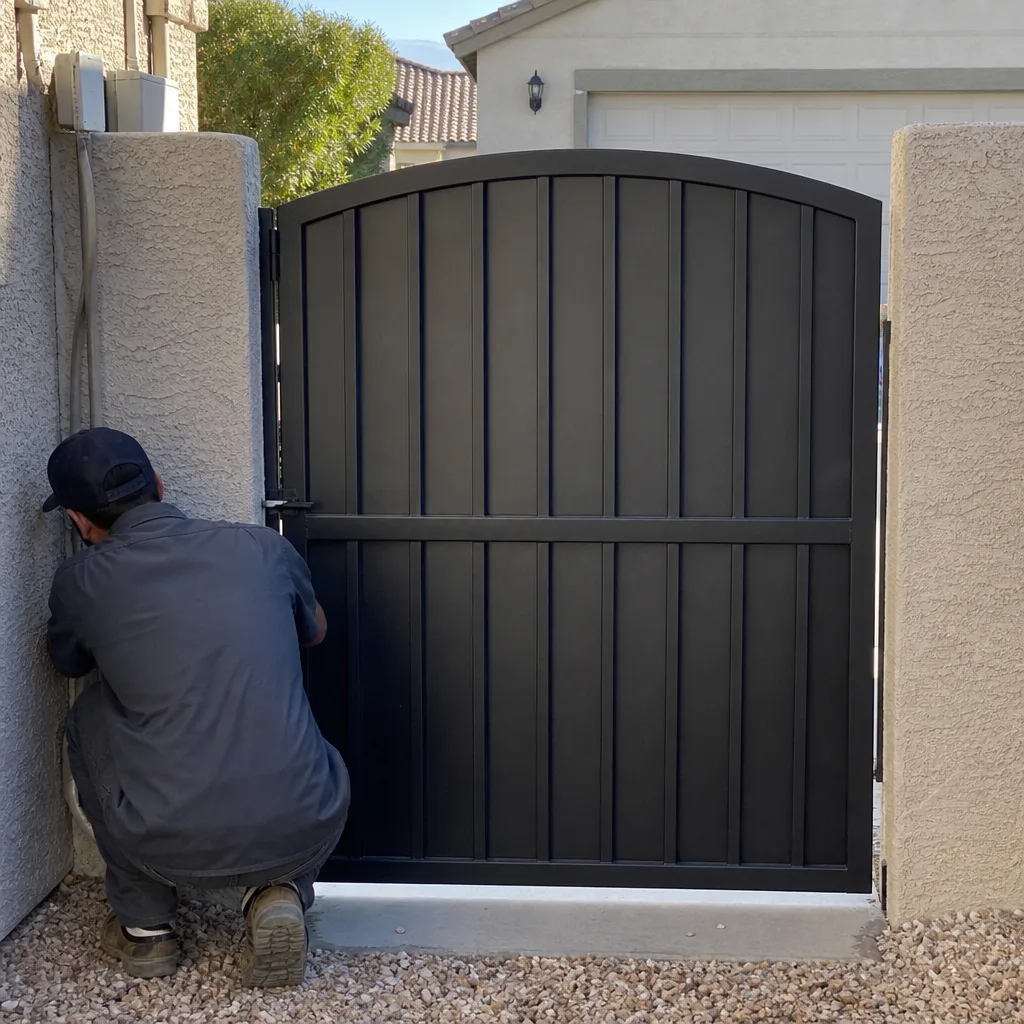 After
After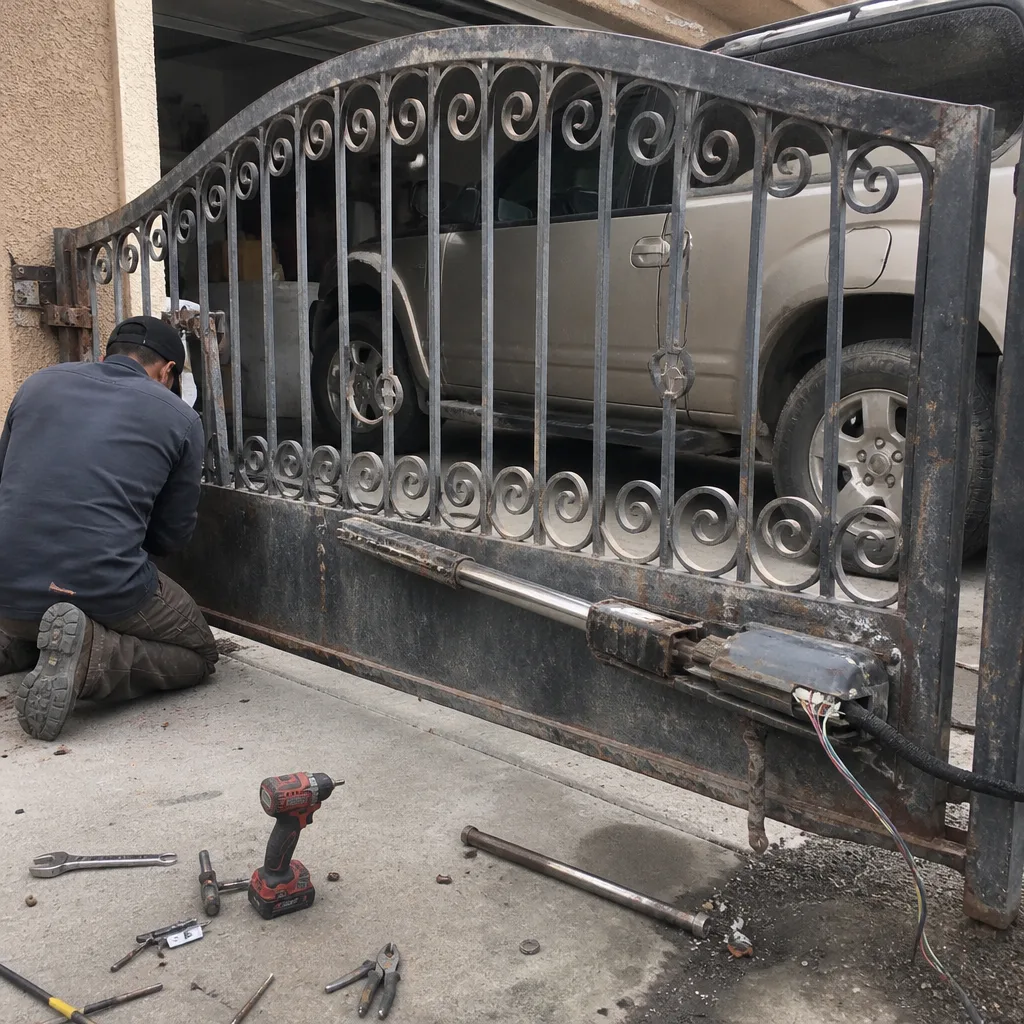 Before
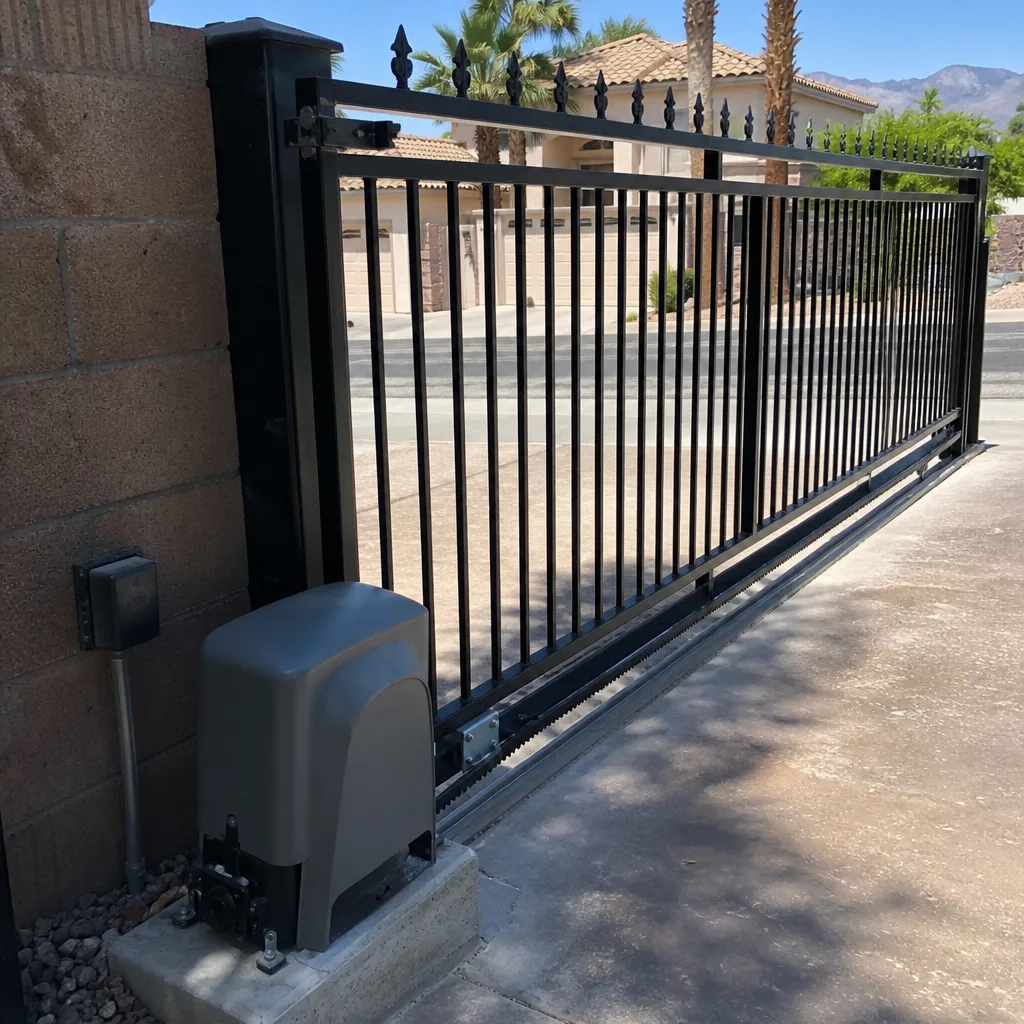 After
After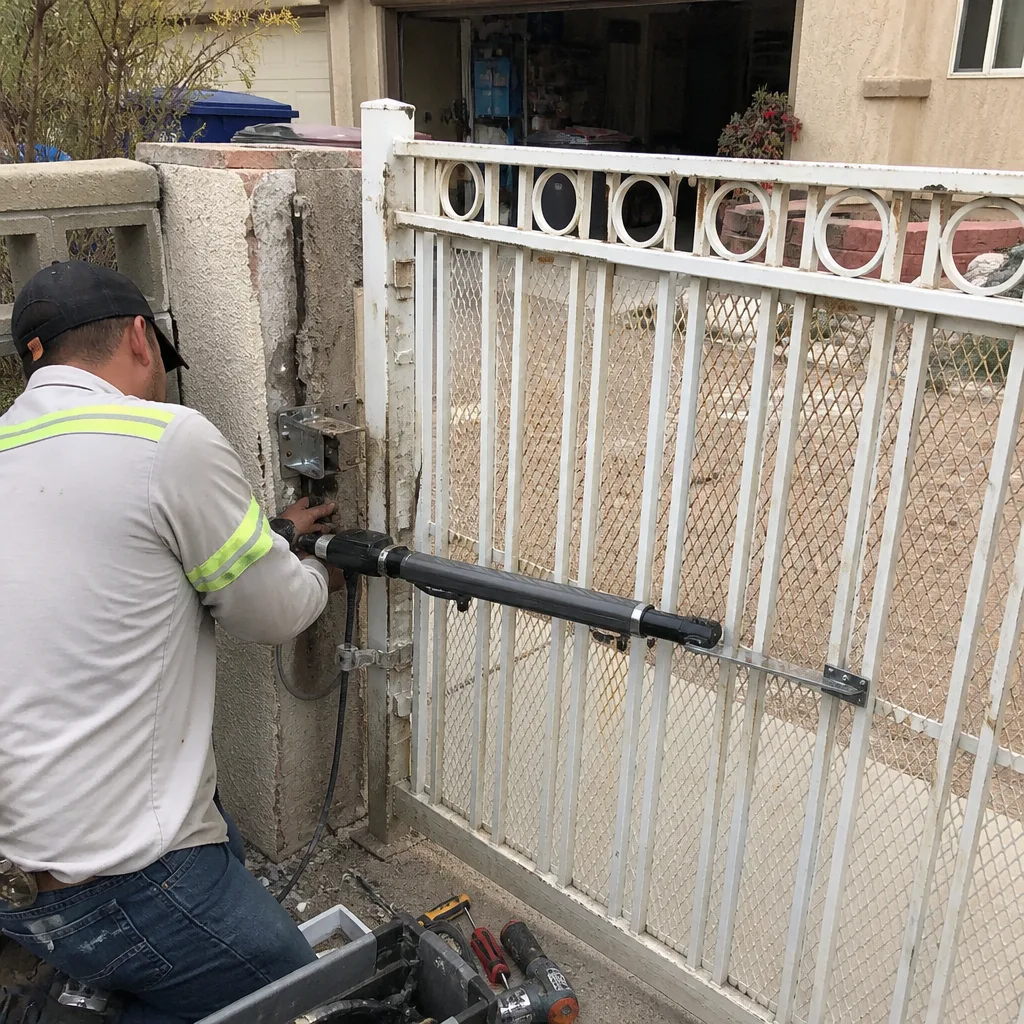 Before
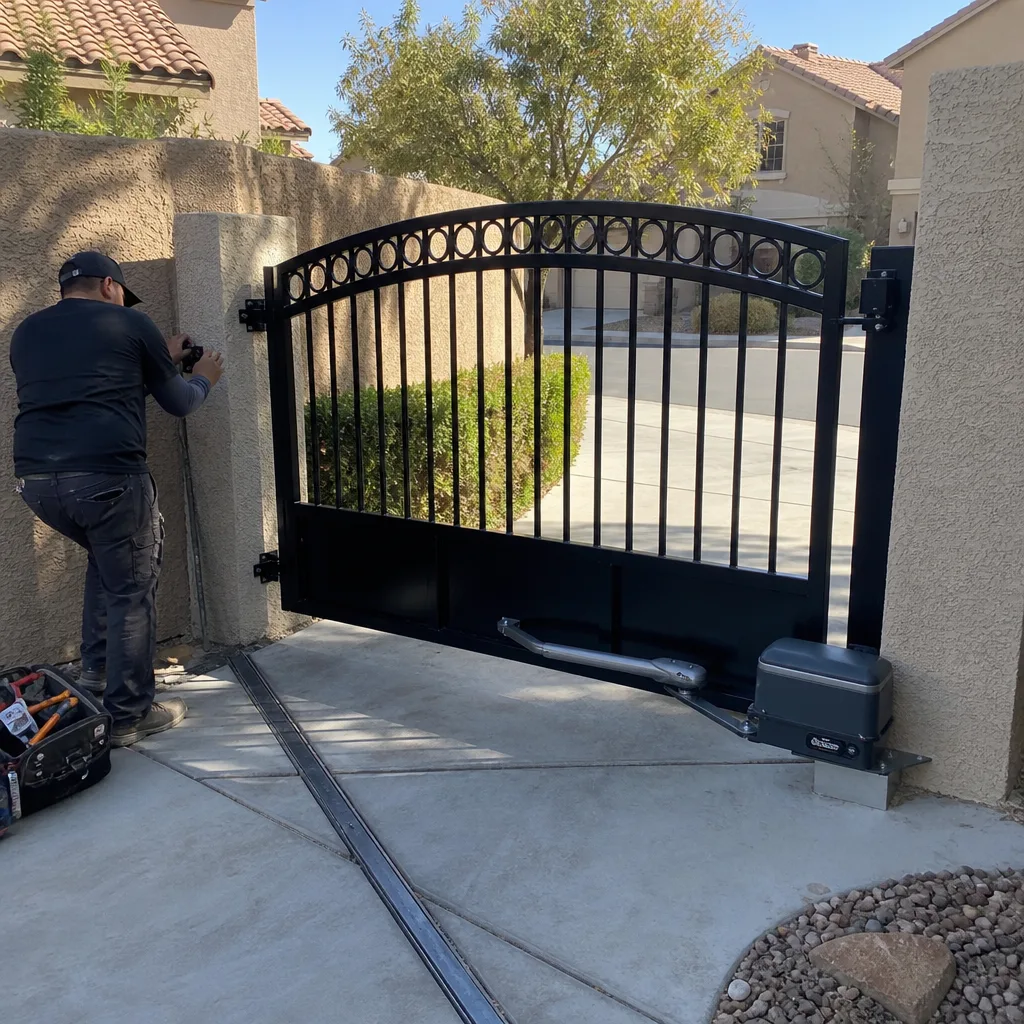 After
After