
Last updated October 16, 2026
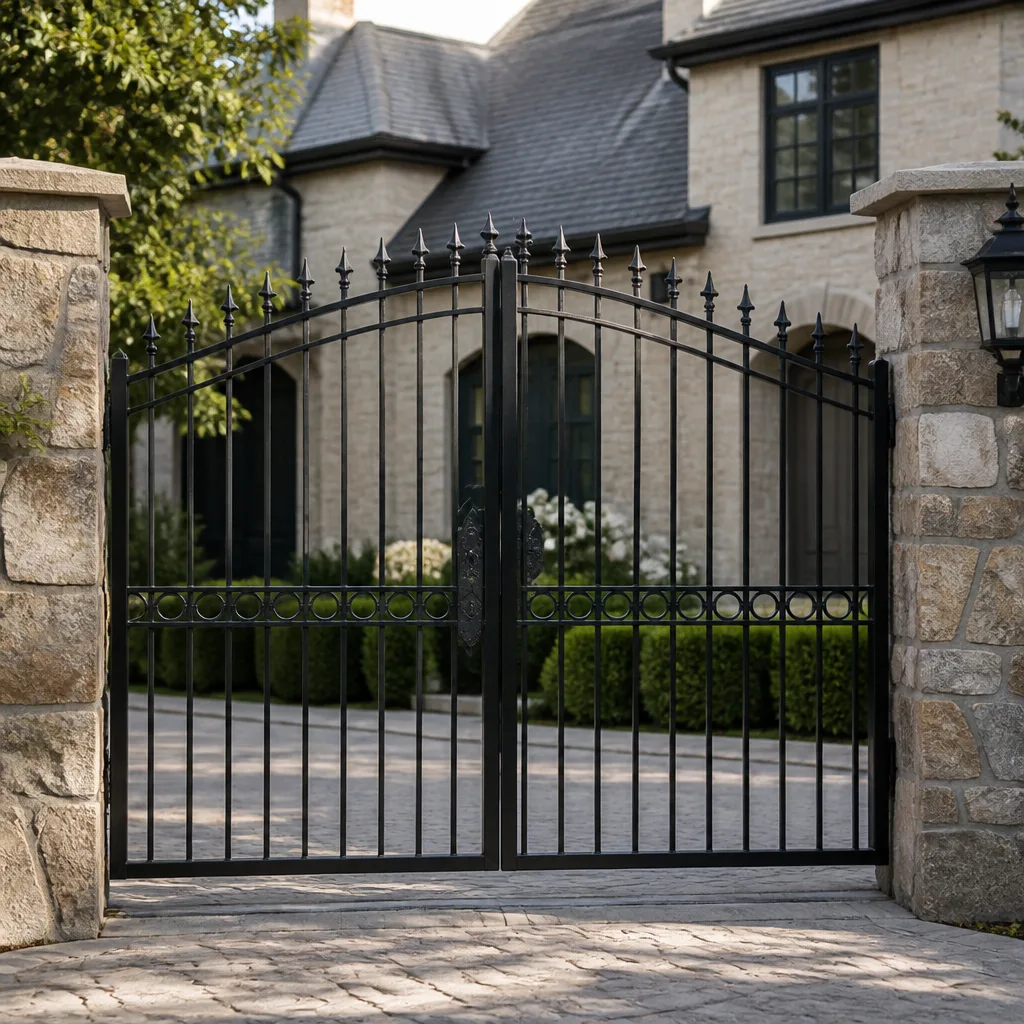 Wrought iron
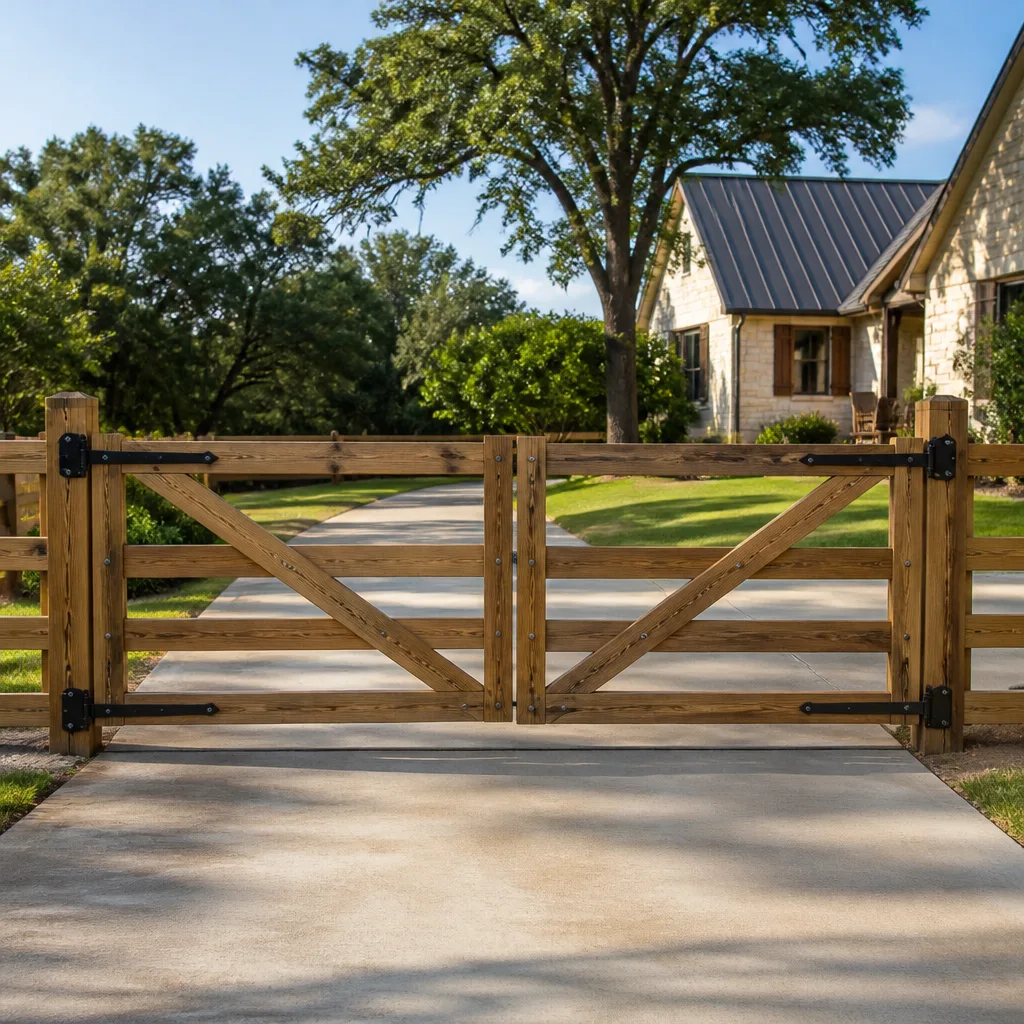 Farm & ranch
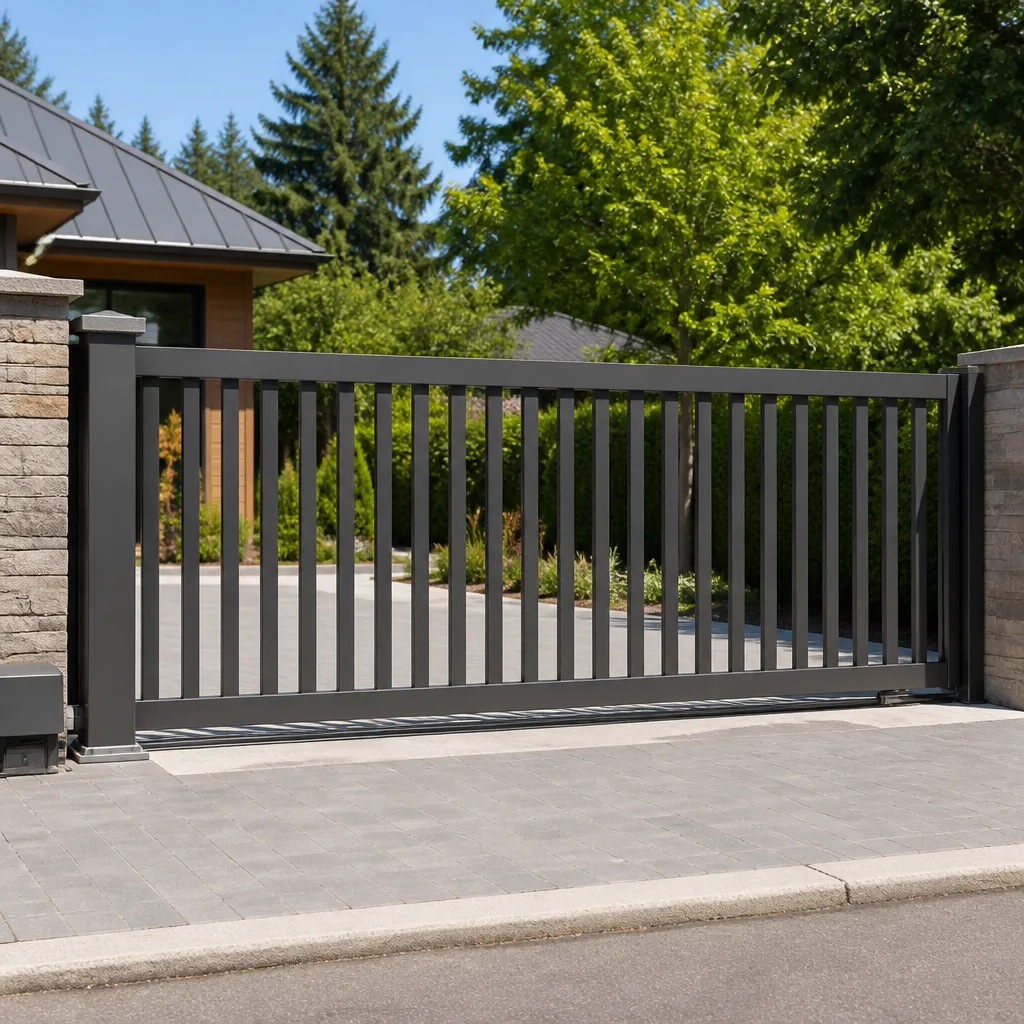 Sliding driveway gates
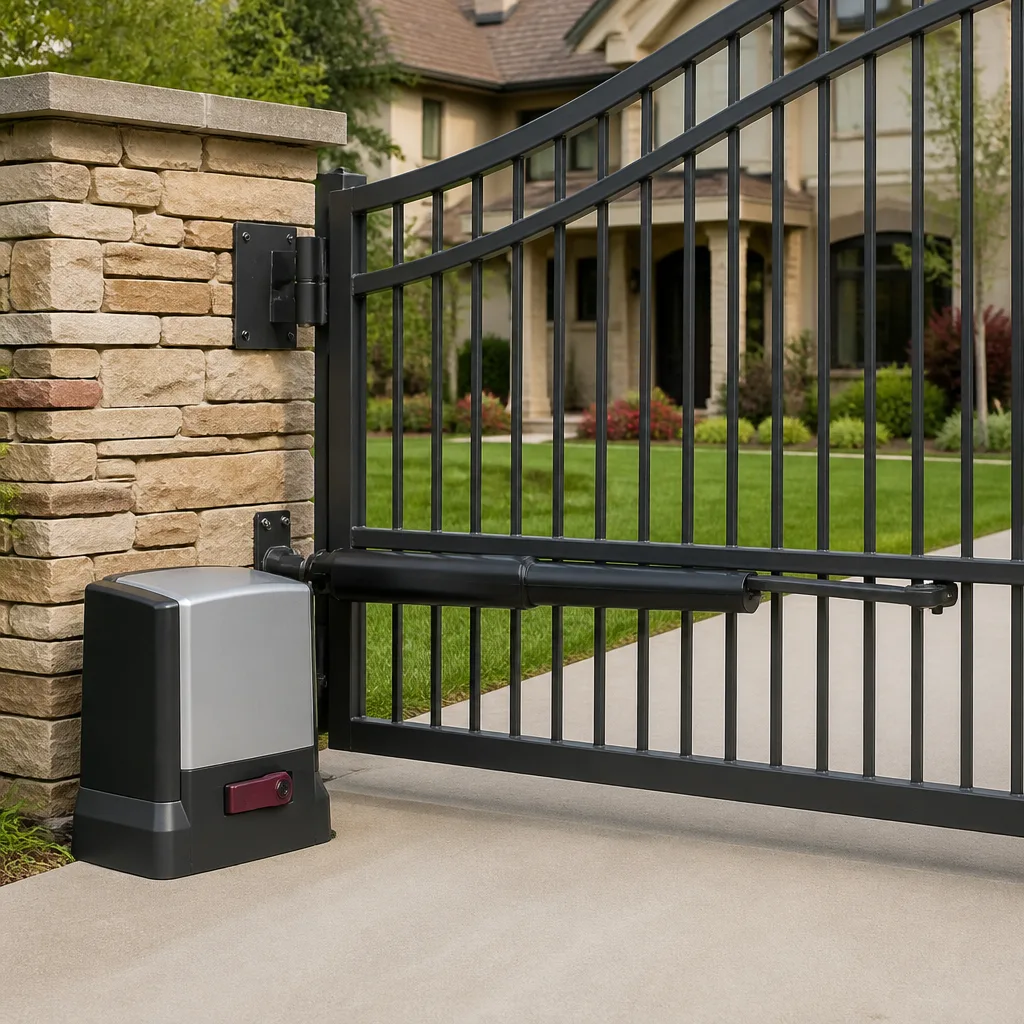 LiftMaster operators
Free on-site gate assessment - hinges, posts, and your LiftMaster or Nice gate operator checked before anything is quoted
The assessment is free and the quote is the invoice.
Get your free estimateGate Repair Warning Signs: A Henderson Homeowner’s Reference Guide
A gate that hesitates for two seconds before opening isn’t “getting old” – it’s a motor capacitor showing early failure. That symptom has a $150 repair window that closes when the capacitor fails completely and takes the motor with it, turning a $150 job into a $600 one. In Henderson, where summer heat bakes gate motors and alkaline soil shifts posts out of alignment, warning signs matter more than in most climates. This guide decodes specific symptoms into the failures they indicate, so you can act before a minor issue becomes a gate repair emergency that won’t open at all.
We’ve repaired enough gates in Henderson to see the pattern: most major failures announced themselves weeks in advance through sounds, jerks, delays, and error codes. Homeowners just didn’t have a reference for what those signals meant. This page is that reference.
Quick Answer
Gate repair warning signs in Henderson fall into six categories: motor hesitation or humming with no movement (capacitor or starting circuit failure), grinding or squealing during operation (bearing or chain wear), gate drift or sag beyond its normal arc (post lean from soil movement or hinge wear), intermittent operation tied to heat (overheated motor or control board), battery beeping or slow movement only on battery (battery backup failure, not motor failure), and safety sensor false triggers (misaligned photo eyes or failing loop detectors). A capacitor repair typically runs $150 – $250; a burned-out motor replacement runs $600 – $1,100 with parts. The gap between those numbers is usually two to six weeks of ignored warning signs.
Styles & brands we work with
Table of Contents
- Symptom-to-Cause Reference Table: Sounds, Movement, and Error Codes
- Battery Backup Failure vs. Motor Failure: Two Problems, Different Costs
- Henderson-Specific Warning Signs: Soil Movement, Heat, and Gate Drift
- Safety Hazards vs. Scheduled Repairs: Which Warnings Need Same-Day Attention
- How to Document Warning Signs on Video Before Calling a Technician
- Common Mistakes to Avoid
- When to Call a Professional
- Frequently Asked Questions
Symptom-to-Cause Reference Table: Sounds, Movement, and Error Codes
Gate failures don’t hide. They announce themselves through distinct sounds, movement patterns, and control-board error lights. The key is matching the symptom to the probable cause before the failure becomes total. Here’s the reference map we use when diagnosing gates across Henderson, from Anthem to Inspirada to Green Valley.
Sounds
- Humming with no movement: The motor is receiving power but cannot start. This is almost always a failed starting capacitor on AC motors (LiftMaster, FAAC, BFT units) or a seized gear train on DC motors. Capacitor replacement: $150 – $250. If ignored, the motor windings overheat and the full motor fails: $600 – $1,100.
- Grinding or crunching during travel: Worn drive gears, chain slack, or debris in the track. On slide gates, a crunching sound at the same point in travel usually means a bent rack section or a worn idler pulley. On swing gates, it’s often a bearing that’s gone dry and begun to gall.
- High-pitched squeal only when starting or stopping: Belt or chain tension is wrong, or the motor’s internal brake is dragging. This is a $120 – $250 adjustment if caught early. Left alone, the belt or chain fails and the gate becomes inoperable.
- Rapid clicking from the control box: A relay chattering, typically caused by low battery voltage or a failing limit switch. The click itself isn’t the problem – it’s the relay telling you the system can’t complete its circuit.
- Silence when you press the remote or keypad: Dead receiver, dead control board, or no power to the operator. Check the breaker first, then the operator’s power light. If the board is dark, the transformer or board has failed.
Movement Patterns
- Hesitation before movement begins: On AC motors, this is the capacitor failing to deliver the starting jolt. On DC motors, it’s often low battery voltage or a worn motor brush. Both are repairable early.
- Gate stops mid-travel and reverses: The obstruction sensor (current sensor on the motor or external safety edges) is tripping. Causes: binding track, a wheel off its rail, low battery sag under load, or a failing motor drawing excess current.
- Gate travels slower than it used to, but only on battery: Battery capacity is dropping. The motor is fine. A new battery pair runs $150 – $350 installed on most residential operators.
- Gate travels past its normal stopping point, then slams or sticks: Failed or misaligned limit switch. The motor doesn’t know when to stop. This is a $100 – $200 fix if addressed before the gate rams its end stop repeatedly and bends hardware.
- One leaf of a double swing gate lags the other: One operator is losing power or a hinge is binding. If it’s the operator, it’s usually a capacitor or a low-voltage condition. If it’s the hinge, Henderson’s soil has likely shifted the post.
Error Codes
Most modern operators (LiftMaster, FAAC, BFT, Linear, Mighty Mule) blink diagnostic codes through an LED on the control board or a remote handheld display. Common codes and their plain-English meaning:
- Two blinks, pause, repeat: Obstruction detected or force setting too low. Start by clearing debris from the track, then check wheels and rollers.
- Three blinks: Limit switch error. The motor can’t find its travel limits. On Mighty Mule and Ghost Controls units, this is often a magnet that fell off the gate or a reed switch that’s out of alignment.
- Four blinks: Battery voltage critically low. Charge or replace the batteries before running the gate on AC, because the charger may be gone too.
- Five blinks: Motor overcurrent. The motor is working against excessive resistance – binding hardware, a bent track, or internal motor wear. Don’t just reset this code. Find the resistance.
- Solid light, no response: The board is receiving power but not executing commands. This can be a failed logic board or a locked-out remote. Test the keypad and manual push button before condemning the board.
We see these same failure patterns across all nine brands we service in Henderson. The symptom maps the same regardless of badge. What changes is board layout, wiring color, and parts cost. If you’re not sure what an error code means, a two-minute phone call with the code number and gate behavior beats two hours of forum searching or browsing more guides & resources. Call (775) 307-6571 and describe what you see; you’ll get a straight answer, not a sales pitch.
Battery Backup Failure vs. Motor Failure: Two Problems, Different Costs
This is the most misdiagnosed gate problem in Henderson, and it costs homeowners real money. A battery backup that’s dying and a motor that’s failing produce overlapping symptoms: slow gate movement, hesitation on start, intermittent operation, and reduced force. But battery replacement costs $150 – $350. Motor replacement costs $600 – $1,100. Telling them apart before you call a technician determines whether you’re looking at a small job or a large one.
How to Distinguish
- Test the gate on wall power only. Unplug the battery backup or shut off the battery breaker, then run the gate on AC power alone. If the gate runs at full speed and full force on AC, the motor is healthy and the batteries are the problem. If the gate is still slow or weak on AC, the motor or drive train is the issue.
- Watch the battery indicator. Most operators (LiftMaster, FAAC, BFT, Linear) have a battery status LED or display. If the indicator shows low voltage while the gate is plugged in, the charger may have failed, not the battery. Replacing batteries without fixing the charger means the new batteries fail in weeks.
- Listen for the difference. A motor with failing windings hums loudly and runs hot even when it does move. A battery-starved motor still hums at a normal pitch but lacks torque. It’s a subtle difference, but after a few hundred diagnoses you can hear it across a yard.
- Check battery age. Sealed lead-acid backup batteries last 3 – 5 years in Henderson’s heat. If your batteries are older than that, replace them before they take the charger down with them. A failed battery can pull a charger into a low-voltage loop and burn it out.
At Gate Motor Repair in Henderson, we run this diagnostic in the first ten minutes of any call where a motor is suspected. It saves our customers from paying for a motor they don’t need, and it saves us from replacing a motor when the real culprit is a $200 battery pair. If you suspect a motor problem, call and ask for the battery differential test before agreeing to any motor quote.
Henderson-Specific Warning Signs: Soil Movement, Heat, and Gate Drift
Henderson’s soil and climate create gate failures that a technician in Portland or Austin never sees. The top three local factors are expansive alkaline soil, summer heat that exceeds 110°F, and wind-driven dust that coats every moving part. Each produces its own warning signs.
Soil Movement and Post Lean
Henderson sits on layers of caliche and expansive clay. When irrigation water or monsoon rains reach the clay, it swells. When it dries, it shrinks. Over years, this cycle pushes gate posts out of plumb – sometimes a quarter inch, sometimes two inches. The warning sign is a gate that starts to sag or drift from its normal closed position. You’ll notice the latch no longer lines up cleanly, or the gate scrapes the ground on the swing arc’s lowest point, or the gap at the top hinge increases.
This isn’t a hinge problem. Tightening hinges on a leaning post buys weeks, not years. The fix is re-setting the post in concrete with proper depth for Henderson’s soil conditions, or in severe cases, helical piers. Post reset in Henderson typically runs $400 – $900 per post depending on access and concrete removal. Catching the lean at a half inch is the difference between a post reset and a full gate rebuild. Walk your gate line every spring and mark the post base against a level. A quarter-inch movement in a year is your early warning.
Heat-Related Capacitor and Board Failures
Capacitors are the most heat-sensitive component in any gate operator. A capacitor rated for 105°C still degrades faster inside a metal operator box that bakes to 150°F on a July afternoon in Henderson. The warning sign is a gate that fails to respond on the first remote press of a hot afternoon but works fine in the morning. That’s not a flaky remote. That’s a capacitor cooked to the edge of its tolerance. Replace it during the $150 window, before it vents electrolyte and takes the motor winding insulation with it.
Control boards fail the same way. Solder joints expand and contract with heat cycles until a micro-crack opens in the connection. The gate works at 5 a.m., fails at 3 p.m., works again at 9 p.m. Homeowners call this “possessed.” Technicians call it a thermal intermittent. The fix is board replacement or reflow soldering, and the cost is lower if the board hasn’t shorted adjacent components when it finally let go.
Dust and Every Moving Part
Henderson’s wind blows fine silt into gate tracks, chain housings, limit switches, and photo-eye lenses. The warning signs are cumulative: a gate that moves in small jerks because the chain is packed with grit, a limit switch that won’t trigger because dust is blocking the actuator, a photo eye that trips the safety reverse because the lens is coated. Blowing out the track and housings every six months prevents most of these. If your gate already jerks, a proper track cleaning and chain lubrication is a $100 – $180 service in Henderson before it becomes a $450 drive repair.
For homeowners who want a full-site evaluation of gate issues before they become failures, our Gate Repair in Henderson page covers what a standard inspection includes and what it should cost.
Safety Hazards vs. Scheduled Repairs: Which Warnings Need Same-Day Attention
Not every warning sign is an emergency, but some are. The line between “schedule it this week” and “call now” is whether the failure can injure someone, trap someone inside, or allow unauthorized entry. Here’s the split, based on what we tell Henderson homeowners every week.
Same-Day Attention: Safety and Security Failures
- Gate reverses on a child or pet. The obstruction sensor has failed or the force setting is too high. This is how children get seriously injured. If your gate doesn’t reverse when it meets resistance, disconnect power to the operator and call a technician immediately. Don’t run the gate manually until the force setting and safety edges are verified.
- Gate fails in the open position. A gate stuck open is a security breach. In Henderson neighborhoods where gates control pool access, street access, or side-yard access, an unclosable gate is an open invitation. This is a live-person, same-day call.
- Gate closes with excessive force or slams at the end of travel. The limit switch or the hydraulic closer (on some swing operators) has failed. A gate that slams is a guillotine waiting for a hand. Kill the power and call.
- Smoke, burning smell, or a hot control box. Shut down the breaker immediately. This is an electrical fire hazard. Don’t reopen the box. A technician needs to inspect the board, wiring, and motor for short circuits before power is restored.
- Spark or electrical arc visible at the motor or wiring. Same answer: kill the breaker, keep people away, call for immediate service.
Scheduled Repair Window: Mechanical Wear Without Immediate Danger
- Slow operation that’s consistent, not intermittent. A gate that runs 30% slower every day but still opens and closes safely can wait for a scheduled appointment. This is usually battery degradation, gear wear, or track debris – annoying, not dangerous.
- Grinding noise with normal operation. Worn bearings or chain slack. Schedule within the week; the gate still functions, and the failure mode is gradual.
- Gate drift beyond normal, but still latches. Post lean. It won’t injure anyone this month, but it will worsen, and the repair cost climbs with every inch of movement. Schedule a post inspection.
- Remote works only at close range. Failing transmitter battery or receiver antenna degradation. Replace the remote battery first (a $2 fix). If range is still poor, the receiver may need service. Not an emergency.
- Keypad works intermittently. Usually dirty contacts or a failing keypad membrane. Schedule when convenient. The gate still opens by remote.
If you’re not sure which category your symptom falls into, call (775) 307-6571. A live person answers – weekends and holidays included – and will tell you honestly whether it’s a same-day issue or a scheduled one. We don’t manufacture emergencies to fill a calendar.
How to Document Warning Signs on Video Before Calling a Technician
A 30-second video is worth more than a five-minute verbal description. When you call Carver Gate Repair Henderson home about an intermittent gate problem, the first question our team asks is whether you have video. Here’s what to capture, and how.
What to Film and Why
- Full gate travel from both directions. Stand where the entire gate and track are visible. Film the gate opening fully, pausing at each end, then closing fully. This shows the technician travel speed, hesitation points, drift, and any binding. Do this in daylight.
- The motor and control area during operation. Film the operator with the cover on, then the sound it makes during travel. Audio is critical – a hum, grind, or chatter tells us more than a photo of a wiring diagram ever will. Hold the phone six feet from the motor for clear sound without wind distortion.
- The post bases and hinges. Walk from one post to the other, holding the camera at post-base height. Film the gap between the gate and the post, the hinge plates, and the concrete. Post lean is visible on video when you hold a level line reference (your phone edge against a straight gutter downspout or the fence line works).
- Error code LED while the gate fails. If the gate misbehaves, film the control board’s LED. Count the blinks out loud. “Two blinks, pause, two blinks” on video beats “the light was doing something weird” over the phone every time.
- The gate failing, not just successfully operating. If the gate fails intermittently, keep your phone accessible. The exact moment of failure – with sound – is the most valuable evidence. Film what happened right before the failure too: a remote press, a keypad entry, a car approaching the loop detector.
- The gate in both heat and cool conditions. If the gate fails only on hot afternoons, film it working in the morning and failing at 3 p.m. The contrast confirms thermal intermittent and saves diagnostic time.
Send the video when you book the appointment. Our technicians review it before they arrive, which means the truck shows up with the right parts on the first trip more often. That’s not a convenience. That’s the difference between one visit and two.
Common Mistakes to Avoid
- Resetting a tripped breaker repeatedly without finding the cause. The breaker tripped for a reason. Each reset sends another surge through a degrading motor or board. Find the short before you reset the breaker a fourth time. In Henderson, motor overheating trips breakers every summer – resetting without fixing the ventilation or replacing the failing component makes the eventual repair bigger.
- Lubricating a noisy gate with WD-40. WD-40 is a solvent, not a lubricant. It strips existing grease and leaves moving parts drier than before. Use a proper lithium or silicone-based lubricant on chains, hinges, and bearings. The wrong spray turns a $50 maintenance task into a $300 bearing replacement.
- Ignoring a gate that runs slow on battery because “it still works on AC.” Dead backup batteries pull the charger down with them. By the time the gate stops working on AC too, you’re replacing batteries and the charger board. Test the battery system every year in Henderson’s heat, not every five.
- Tightening hinge bolts on a leaning post. Cranking the bolts down doesn’t move the post back to plumb. It stresses the hinge plates and the gate frame until something cracks. Address the post lean, not the symptom.
- Replacing the remote when the gate hesitates. Hesitation is a motor or power issue, not a transmitter issue. New remotes don’t fix a weak capacitor. We see homeowners spend $80 on a remote, then $250 on the capacitor they should have diagnosed first.
- Waiting until the gate stops completely before calling. Most gate failures telegraph themselves for two to six weeks. During that window, the repair is usually a component replacement under $300. After the failure, the repair is a motor or board replacement over $600. The warning signs in this guide are the difference between those two invoices.
- Running a safety-edge-disabled gate manually to “get by” for a few weeks. A gate without working safety reverse can injure a child, a pet, or a delivery driver. If the safety edge is disabled, the gate is off limits until it’s repaired. No convenience is worth that liability in Henderson.
When to Call a Professional
Call a gate technician when you see any of the safety-critical signs above: a gate that doesn’t reverse on obstruction, a gate that slams, a burning smell, or a gate stuck open. See our guide on How to Hire a Gate Repair Contractor in Henderson: A Step-by-Step Guide to know what to ask when you call. Call when you hear a consistent grinding or humming that you can’t identify. Call when the gate fails in the heat but works in the cool. And call when the post base has moved at all – Henderson soil doesn’t self-correct.
Carver Gate Repair Henderson offers free estimates throughout Henderson and the surrounding valley, with written prices before any work starts. If you’ve noticed any symptom from this guide, call (775) 307-6571 and describe what you’re seeing. You’ll get a straight answer about urgency and cost, and if the job needs a visit, the price is on paper before we touch a wrench.
Frequently Asked Questions
Gate repair in Henderson ranges from $150 – $250 for capacitor replacement and limit switch adjustments, up to $600 – $1,100 for full motor replacement, with most mechanical repairs such as bearing replacement, chain tensioning, and wheel or roller service falling between $250 – $500. Every Carver Gate Repair job in Henderson comes with a written price before work begins, so the number doesn’t move when the job gets opened. For an exact quote on your gate’s symptom, call (775) 307-6571 – estimates are free.
That’s a heat-related failure pattern, and in Henderson it almost always points to a failing capacitor, a thermal-intermittent solder joint on the control board, or an overheated motor. The component expands in the afternoon heat and loses connection or tolerance, then contracts at night and works again. This is not a fluke. It will worsen until the gate stops entirely. Call (775) 307-6571 before the failure becomes permanent.
Run the gate on AC power alone with the batteries disconnected. If the gate runs at full speed and force, the batteries are the issue ($150 – $350). If the gate still runs slow or weak on AC, the motor or drive train is failing ($600 – $1,100). We run this test on every Henderson motor diagnostic call before quoting any motor work. For a differential diagnosis without the guesswork, call (775) 307-6571.
Grinding on a slide gate usually means worn drive gears, a bent rack section, or debris packed into the track. A crunch at the same point in travel points to the rack. A constant grind through the full travel points to the drive gear or an idler pulley that’s failed. Most of these are $250 – $500 repairs if caught early. Call (775) 307-6571 for a free estimate in Henderson.
Properly re-setting a gate post in Henderson’s expansive soil requires digging to the right depth for the soil conditions, re-plumbing the post, and pouring concrete with the right mix for alkaline ground. A temporary brace and some quick-set will fail within a season because the soil movement that caused the lean is still active. This is a job for a professional with local soil experience. Our Gate Installation in Henderson team re-sets posts and rebuilds gate lines throughout the valley.
For safety and security failures – a gate stuck open, a gate that won’t reverse on obstruction, or a gate that slams – we dispatch same-day in Henderson. For mechanical wear issues without immediate danger, we schedule within the week. Phones are answered by a live person 24/7, so you’ll know your timeline before you hang up. Call (775) 307-6571.
The Bottom Line
Most gate failures in Henderson give clear warning signs for weeks before the gate stops working. A humming motor, a two-second hesitation, a gate that drifts from its normal arc, a control board that blinks a code – each one maps to a specific mechanical failure, and most of those failures are under $300 during the warning window. Miss the window, and the same job becomes a $600 – $1,100 motor or board replacement. In Henderson’s heat and shifting soil, those windows close fast. Learn the symptoms. Document them on video. Call when you see them. The gate tells you what’s wrong before it quits. Listen first, pay less later.
Written by Lonnie Burke, Owner at Carver Gate Repair Henderson, serving Henderson since 2008.
See the difference
 Before
 After
After Before
 After
After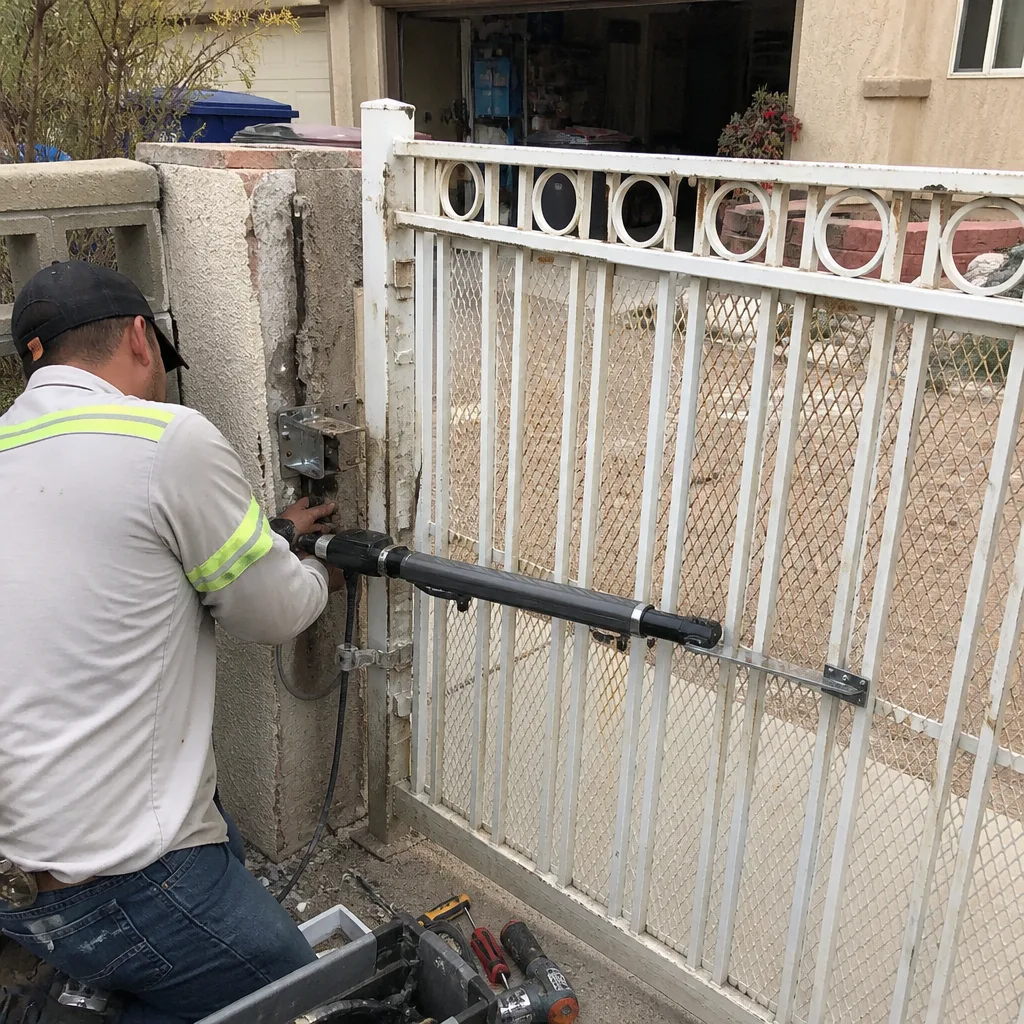 Before
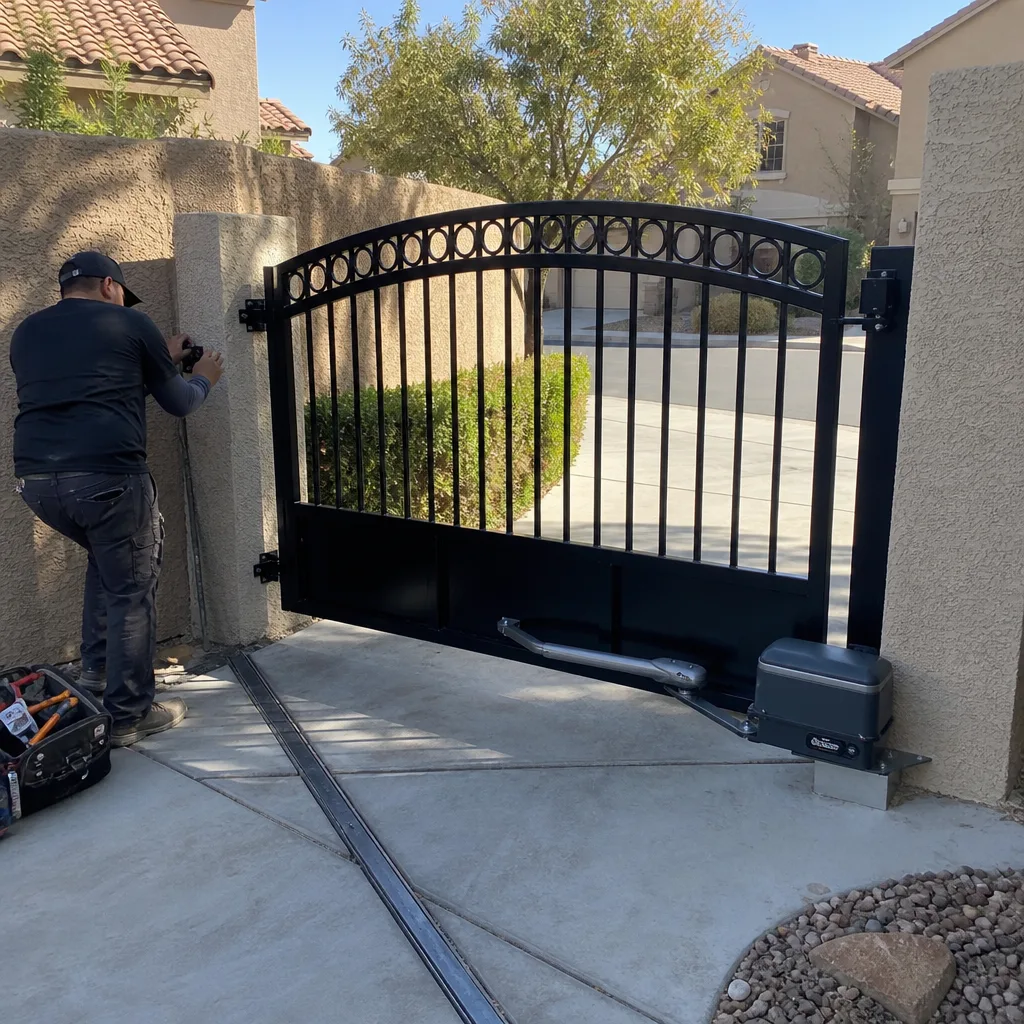 After
After